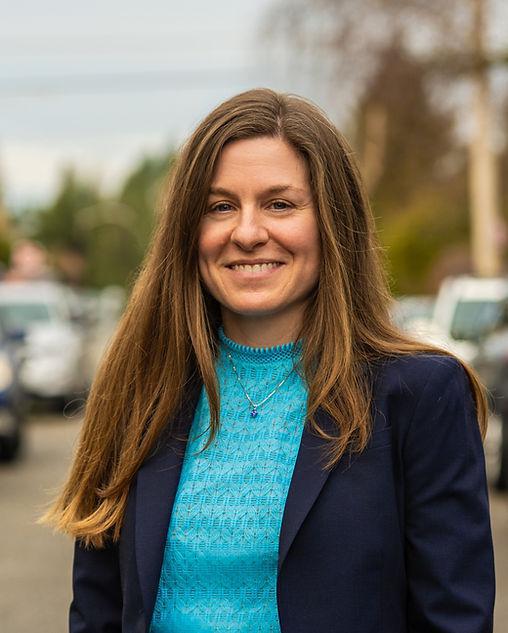
Katharine Edwards, a public defender at the King County Department of Public Defense, is running for Seattle Municipal Court Judge Position 2 in the Nov. 3 general election. The nonpartisan race will appear on ballots across the city, including Queen Anne, Magnolia and Ballard.
Edwards said on her campaign website that accountability in misdemeanor cases should "fit the offense." She said holding someone in custody on a misdemeanor while more serious cases result in release "undermines both fairness and rehabilitation."
Candidate information
- Office sought: Seattle Municipal Court Judge, Position 2
- Election date: Nov. 3, 2026
- Party: Nonpartisan
- Hometown: Grew up in Redmond, Washington, according to her endorsement questionnaire
- Education: J.D. in law, Lewis & Clark Law School (claimed by the candidate)
- Professional memberships: Washington State Bar Association, Washington Defenders Association (claimed by the candidate)
- Endorsements: King County Democrats, UAW Local 4121
UAW Local 4121 cited Edwards' "experience as a public defender, thoughtfulness about protecting court participants from ICE, and focus on eliminating disproportionate sentencing" in its endorsement.
Experience and public service
Edwards said she has worked as a public defender at the King County Department of Public Defense. She said she became a supervising attorney at the department's Seattle Municipal Court division in 2018. She also said she interned at The Defender Association's Seattle misdemeanor division.
On the issues
The following positions are drawn from Edwards' responses to the King County Democrats endorsement questionnaire and her campaign website. All statements are the candidate's own.
Criminal justice and public safety: Edwards said judicial decision-making should "prioritize research-backed programs, remain open to innovations supported by practitioners, and demand real data about outcomes before mandating participation." She said accountability "must be meaningful — and meaningfully effective."
Gender equity: Edwards said she would examine her own decision-making for implicit bias, particularly in areas identified by the 2021 Gender Justice Study of Washington Courts. Those areas include bail determinations, sentencing and treatment of domestic violence cases, she said. She said she would support ongoing education on gender equity for herself and court staff.
Civil liberties and hate crimes: Edwards said hate crime cases present "a genuine constitutional tension when the conduct charged is based solely on speech." She said she would apply First Amendment protections "rigorously and consistently" while taking seriously "the real harm caused to individuals and communities targeted because of who they are."
Emerging technology: Edwards said her approach to novel legal issues involving AI-generated evidence or digital surveillance would begin with "first principles." She said she would rely on expert testimony, consult legal scholarship and study how courts in other jurisdictions have addressed similar questions. She said she would remain "appropriately skeptical of mandating participation in programs before real outcome data exists."