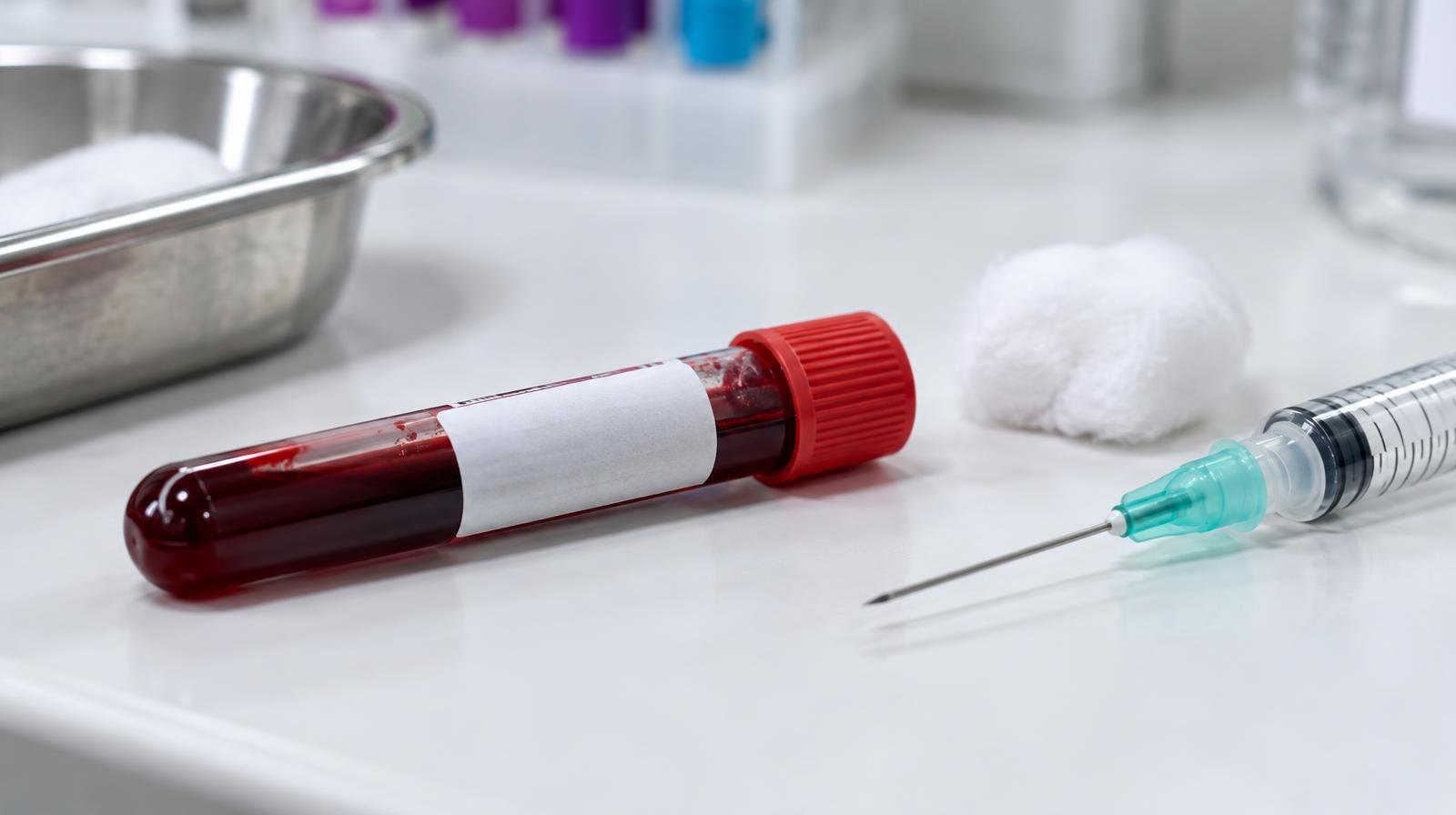
A $949 blood test marketed to detect more than 50 types of cancer moved closer to federal approval Wednesday, Sept. 23.
A Fred Hutchinson Cancer Center researcher who co-leads a federal study of such tests says the oncology community does not support it.
A U.S. Food and Drug Administration (FDA) advisory panel voted 7-2, with one abstention, that the benefits of Grail's Galleri test outweigh its risks for adults 50 and older.
The FDA is not required to follow the recommendation but typically does.
As first reported by The Seattle Times, Dr. Scott Ramsey, director of the Hutchinson Institute for Cancer Outcomes Research at Fred Hutch, co-leads a National Cancer Institute (NCI)-funded study evaluating multi-cancer detection tests.
He said the oncology community does not yet support the test.
"That's why nobody in the oncology community is recommending this test," Ramsey said.
Ramsey, an internist and health economist, co-leads the NCI's Cancer Screening Research Network Vanguard Study at Fred Hutch.
That federally funded study aims to answer what the available data has not: does catching cancer signals in blood actually save lives?
No randomized controlled trial has shown that Galleri or any similar test reduces cancer deaths.
Grail conducted a large trial of more than 140,000 participants in the United Kingdom and announced in February that the test failed to meet its primary goal of reducing late-stage cancer diagnoses.
Across both the U.K. trial and a U.S. study, the test detected only one in three cancers diagnosed by doctors within 12 months, according to FDA representatives at the meeting.
Detection was weakest in early-stage disease: 13.6% of Stage I cancers and 34.4% of Stage II cancers. It rose to 60% for Stage IV.
Philip Castle, director of the NCI's cancer prevention division, said at the meeting that the test's ability to find early-stage cancers "where intervention matters the most, remains poor."
Panel member Dr. Stanley Lipkowitz, chief of the women's malignancies branch at the NCI, warned that approving Galleri without outcome data would lower the bar for every test that follows. He voted against the recommendation.
Still, panelists who voted in favor pointed to the test's ability to flag cancers that lack routine screenings, such as liver and pancreatic cancer. About 58% of the roughly 630,000 U.S. cancer deaths expected in 2026 involve cancer types with no recommended screening, according to FDA estimates. The panel also voted unanimously that Galleri is safe, citing low false-positive rates.
Galleri has been sold in the United States since 2021 under a regulatory exception for lab-developed tests.
About 117,000 people took it in the first half of 2026 alone, not counting research participants. Most paid the $949 list price out of pocket.
That cost could change. Congress included the Medicare Multi-Cancer Early Detection Screening Coverage Act in the fiscal year 2026 spending bill, which President Trump signed Feb. 3.
The law authorizes Medicare to cover FDA-approved multi-cancer blood tests starting in 2028. Grail lobbied for the legislation, according to the Seattle Times. Whether major Seattle-area insurers such as Premera, Regence or Kaiser Permanente Washington plan to cover the test before then is unknown.
The FDA is expected to make a final decision on Galleri's approval in the coming months. No specific date has been announced.