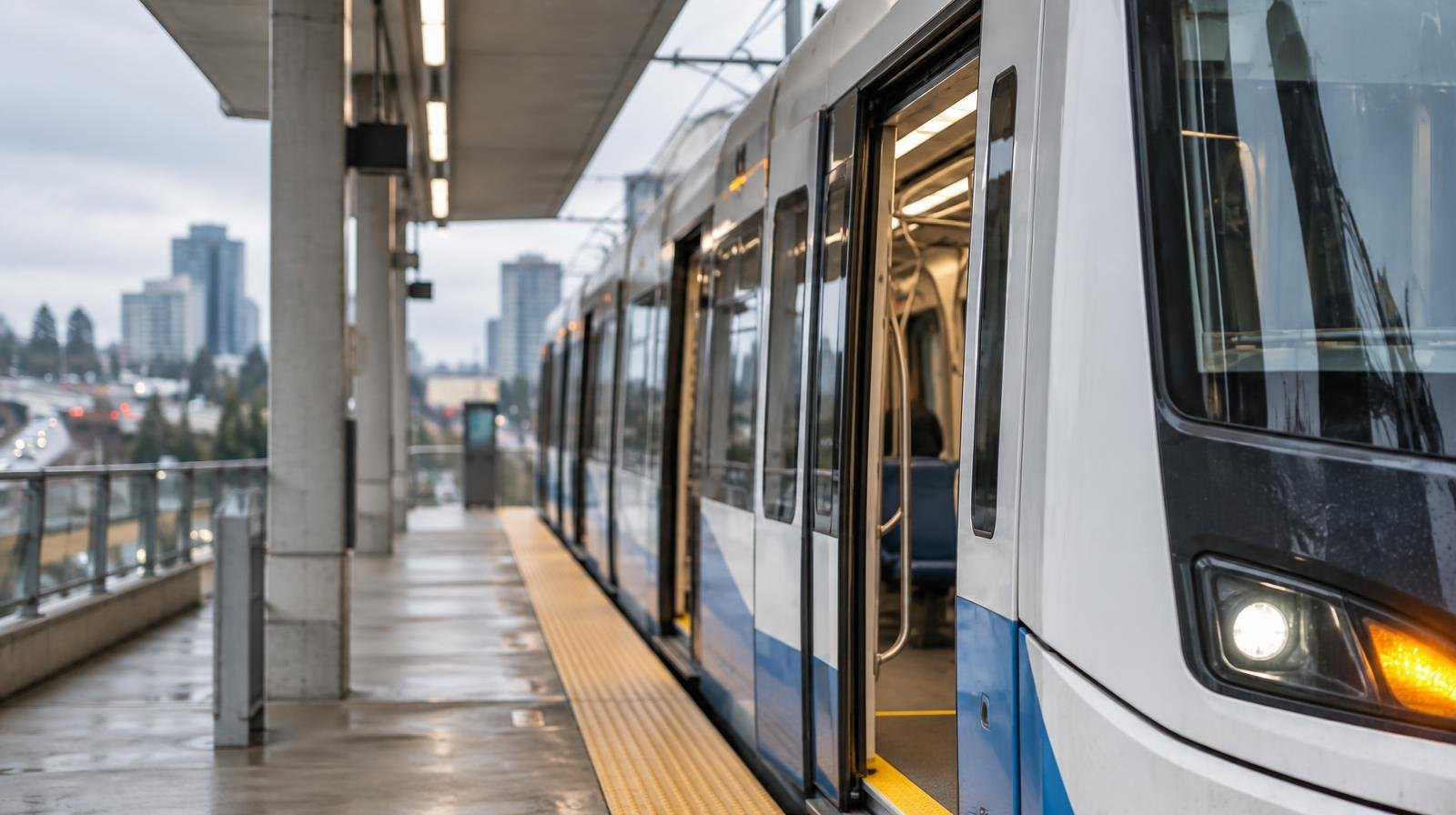
Ballard residents who voted for light rail a decade ago will have to watch from a distance Wednesday when Seattle's newest station opens in Pinehurst. It will be the last for at least five years.
Sound Transit's $240 million Pinehurst Station begins service at 5 a.m. Wednesday, Sept. 30, at Northeast 130th Street near Interstate 5. Trains on the 1 and 2 Lines will arrive every four to five minutes. A community celebration runs from 2 to 6 p.m. with live music and food.
The station is Sound Transit's first infill stop, built on an existing line between Northgate and Shoreline South/148th stations rather than as part of a new extension. It opened five years ahead of its original 2031 target after the Sound Transit Board accelerated design in 2020.
It is also the agency's last new station until Graham Street Station opens in the Rainier Valley, expected in 2031. The reason: a $34.5 billion funding gap over the next 20 years, driven by inflation that packed two decades of expected cost increases into six years, according to Sound Transit.
Ballard, West Seattle in limbo
The shortfall hit the Ballard Link Extension hardest. Voters approved the line in 2016 with a target of reaching Market Street by 2035. That date slipped to 2039. After the Sound Transit Board voted in May to restructure the ST3 capital plan, the line is now funded only to Seattle Center, Axios Seattle reported. No date has been set for reaching Ballard itself.
Seattle City Councilmember Dan Strauss, who represents District 6 including Ballard, said in May the extension could serve 148,000 daily riders, the most of any expansion project in Sound Transit history. "Sound Transit needs a plan to get to Ballard," Strauss said. "We voted for light rail, we have been paying for it, and the City of Seattle has planned its job and housing growth around it."
The West Seattle extension has been pushed from 2030 to 2032, and the originally promised Avalon station was cut to save money.
A station born from political pressure
Pinehurst Station almost didn't happen. In 2016, then-CEO Peter Rogoff hesitated to add it, citing thin ridership projections and concern that a fifth station on the Northgate-to-Lynnwood corridor would jeopardize a $1 billion federal grant, as first reported by The Seattle Times. Council Chair Debora Juarez, who represents District 5 in North Seattle, threatened to publicly oppose the ST3 tax vote if the station was left out. The cost climbed from $65 million to $144 million in 2020 and $240 million at opening.
Density stalled by lawsuit
Whether the station reaches its projected 2,600 to 4,200 daily boardings depends on housing that doesn't exist yet. The Seattle City Council passed a land-use plan in fall 2025 promoting an "urban center" around the station with buildings five to eight stories. But a lawsuit from residents claiming the city must first study effects on trees and streams citywide has frozen the rezoning.
Land Use Committee Chair Eddie Lin told The Seattle Times it could be 2028 before the council finalizes zoning around the station.
New bus route, November ballot measure
King County Metro launched Route 77 in August to connect Bitter Lake, Pinehurst Station, Lake City and the University District, running every 15 minutes.
Meanwhile, the Seattle Transit Measure heading to voters in November would generate roughly $138 million a year through a 0.3% sales tax. It includes $6.1 million annually to support Seattle's ST3 projects, including the West Seattle and Ballard extensions, according to the City Council.
Link light rail carried 166,000 average daily passengers in August, a third more than the same period a year earlier. The next infill station after Graham Street, money permitting, would be Boeing Access Road in Tukwila.