If you pay a Seattle City Light bill in Queen Anne, Ballard, or Magnolia, Tuesday's unanimous City Council vote directly affects your electricity rates and grid reliability.
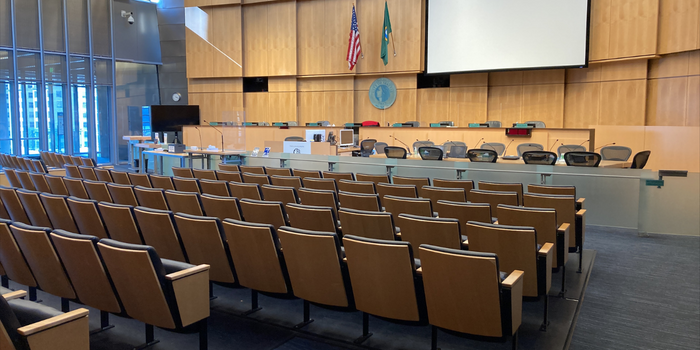
The council voted 9-0 on Tuesday, June 9, to impose an emergency one-year moratorium on new large data center permits. The ban blocks five proposed facilities that would have drawn 369 megawatts from the city's grid. That's enough electricity to power roughly 300,000 homes. Seattle City Light's entire grid capacity is approximately one gigawatt, meaning these five facilities alone would have consumed more than a third of it.
"Seattleites should not be subsidizing record profits of large corporations from the AI boom," said Councilmember Eddie Lin, who co-sponsored the legislation with Council President Joy Hollingsworth.
The moratorium, Council Bill 121214, takes effect upon Mayor Katie Wilson's signature. Wilson said Tuesday she intends to sign it. The ban can be extended an additional six months if needed.
What the moratorium does and does not do
The freeze applies to any new facility that primarily stores and processes digital data and requires more than 20 megawatts of power capacity (technically 20 megavolt-amperes). That's enough to run about 16,000 homes.
It does not shut down Seattle's roughly 30 existing smaller data centers. Each of those can expand by up to an additional 20 megawatts during the pause. It does not affect Amazon or Microsoft, neither of which operates data centers within Seattle city limits, according to GeekWire. And it does not raise your rates immediately.
What it does is prevent a scenario where Seattle City Light would need to build expensive new infrastructure to serve massive new customers. When a utility builds transmission lines, substations, or generation capacity for a single large customer, those costs get spread across all ratepayers through the utility's rate-setting process. The accompanying Resolution 32204 enables Seattle City Light to establish separate rates for new "large load" customers, so that if large data centers are eventually approved, they would pay their own way rather than shifting costs to households.
The subsidy question
Four unnamed companies approached Seattle City Light in April about building five large-scale facilities. Seattle City Light representative Andy Strong told the Seattle Times the utility simply doesn't have the staff or infrastructure to absorb that demand: "We only have so many engineers. We only have so many project managers. It's going to have an impact."
The five proposed data centers would have consumed 10 times more power than the city's existing 30 data centers combined, according to The Verge.
Water, treaty rights, and the environment
Council member Debora Juarez, an enrolled member of the Blackfeet Nation who chairs the committee overseeing Seattle City Light, raised a concern with broader environmental implications. Large data centers use millions of gallons of water for cooling systems. Juarez warned that this consumption could threaten local Indigenous groups' treaty-protected water rights, and said the city consulted with tribal lawyers on data center regulation.
Resolution 32204 directs city departments to study impacts on water use, the electrical grid, utility rates, land use, jobs, and public health. An interdepartmental team must deliver reports and proposed permanent zoning legislation by January 2027.
The permit question
The most locally relevant unresolved thread: Digital Realty filed a permit application for a facility at 301 Virginia Street in Belltown, just 11 days before Tuesday's vote. Whether the moratorium applies to an application already in the pipeline remains unclear, according to GeekWire, and may require court resolution. No other specific locations for proposed facilities have been publicly named.
What comes next
Fifty-two people testified in favor of the moratorium at Tuesday's hearing. Zero spoke against it. Council members received more than 98,000 emails on the issue.
A public hearing is required within 60 days of the ordinance taking effect. Residents should watch for a City Council notice in late July or early August for their chance to weigh in on permanent regulations.
Seattle is the largest U.S. city to enact such a moratorium, according to a database tracked by Interconnected Capital and reported by The Guardian and GeekWire, joining more than 70 cities and counties nationwide with temporary or permanent data center bans.