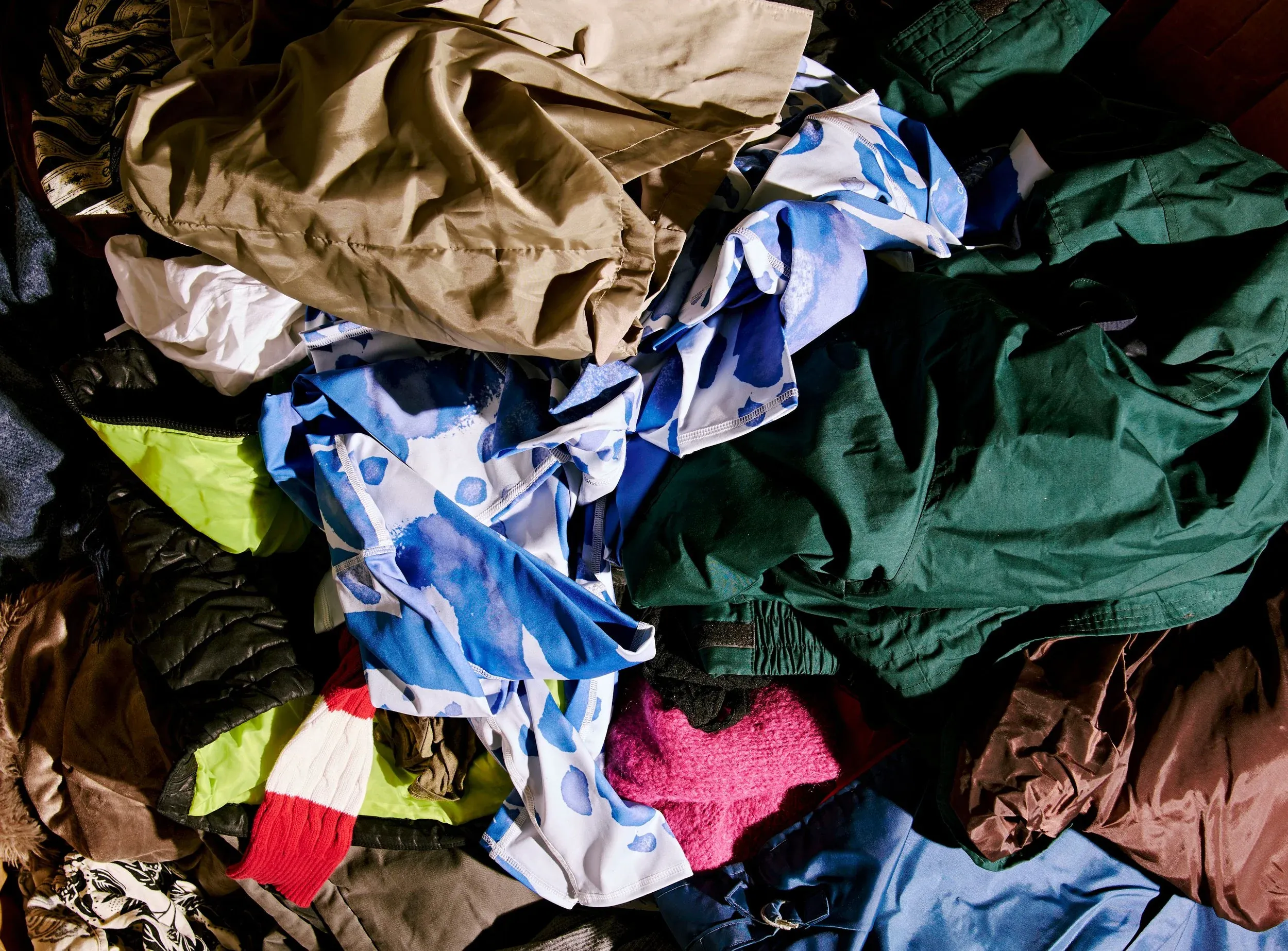
The stretchy spandex in your jeans, socks and workout gear makes those clothes nearly impossible to recycle.
Seattle startup Ravel raised $8.2 million in an oversubscribed seed round to change that.
The funding, announced Thursday, Sept. 17, will move Ravel from its Seattle pilot plant toward commercial-scale operations.
Ravel targets elastane, the fiber also called spandex or Lycra that shows up in athletic wear, jeans, underwear and nearly every other clothing category.
Even a small percentage of elastane in a garment makes the whole thing difficult to recycle.
Ravel's process, which the company calls "purification recycling," separates elastane from blended fabrics and converts the recovered material into recycled plastic pellets. Those pellets can then be used as raw material for new polyester fabrics.
The company says the output achieves price parity with virgin materials, requiring no green premium or subsidy from manufacturers, according to Ravel's press release.
The Ellen MacArthur Foundation has estimated that less than 1% of material used to make clothing is ultimately recycled into new clothing, GeekWire reported. A U.S. Government Accountability Office report found that apparel brands produce roughly twice the amount of clothes they made in the early 2000s.
One Small Planet led the seed round, with AP Ventures, Overlay Capital and Lichen Ventures also participating. Existing investors At One Ventures, Collateral Good and Betterway Ventures provided follow-on funding.
"I'm excited to have found some great folks to roll up the sleeves with," Ravel CEO Zahlen Titcomb said.
Ravel launched in 2019 and raised an undisclosed pre-seed round in March 2025. The company was a finalist for the Sustainable Innovation Award at the 2026 GeekWire Awards, where IUNU took the top prize.
The funding arrives as state legislatures push the fashion industry toward accountability for textile waste. Washington lawmakers introduced HB 1420, a textile Extended Producer Responsibility (EPR) bill, FashionUnited reported.
As introduced, the bill would require manufacturers of certain apparel and textile products to join a producer responsibility organization by Jan. 1, 2027, and fund statewide reuse, repair and recycling programs.
California passed the nation's first textile EPR law in September 2024. Ravel's press release cited EPR legislation as increasing the responsibility brands bear for textile waste.
Ravel has not disclosed specific textile industry partners or a timeline for commercial-scale production. The company says it is actively seeking partners to validate blended textile waste as feedstock.