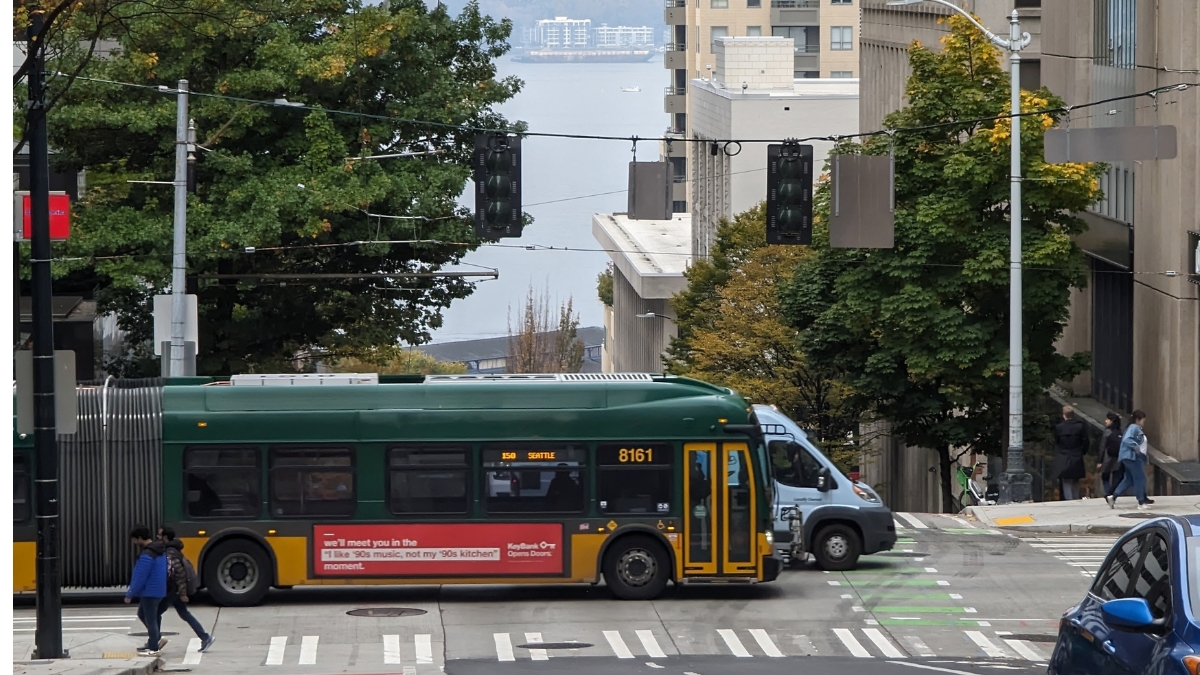
Seattle voters will decide Nov. 3 whether to double a city sales tax dedicated to bus service, adding an estimated 100,000 trips per year.
The Seattle Transit Measure (STM) would raise the tax from 0.15% to 0.3%, boosting the city's bus trips from about 180,000 to 280,000 annually. The focus: more frequent service on nights and weekends.
The Seattle City Council approved the measure 9-0 on July 21 and sent the legislation to Mayor Katie Wilson for her signature.
What it pays for
The renewed STM would generate about $138 million per year over 10 years. That totals roughly $1.4 billion, according to the Seattle Times. About $96 million annually would go toward expanding bus service. Another $23 million would maintain Seattle's two streetcar lines. Approximately $9 million would fund subsidized ORCA passes for about 22,000 low-income residents, and $3.5 million would improve streets and bus stops.
An additional $6 million per year would pay city staff to process permits for Sound Transit 3 projects, including the West Seattle and Ballard Link Extensions, as reported by The Urbanist.
The measure also prioritizes electric bus service in the Duwamish Valley and South Seattle.
Who benefits in District 7 and Ballard
The STM currently funds workhorse routes including the E Line, which runs through Queen Anne, and Route 44, which connects Ballard to the University District. Both are among the routes that could see increased frequency.
An amendment by Councilmember Dan Strauss added Ballard, Northgate and the University District to the route-selection criteria that the Seattle Department of Transportation (SDOT) will use to decide which 10 to 15 routes get more service. Final route choices have not been made.
Kettle's objections
District 7 Councilmember Bob Kettle, who represents Queen Anne, Magnolia and Belltown, opposed the measure's tax rate and duration. He proposed lowering the rate to 0.225%. That amendment failed. He also backed a separate amendment to shorten the measure from 10 years to seven. It failed 7-2.
"My concerns are over property tax, sales tax, now utility rates, which are going up, and the overall impact on affordability," Kettle said at the July 21 council session, according to KOMO News.
What it costs
For a median two-person Seattle household, the tax increase means paying about $58 per year at the register, up from roughly $29 under the current rate, according to Capitol Hill Seattle Blog.
If voters approve the STM, Seattle's combined sales tax rate would rise from 10.55% to 10.7%. With a separate King County sales tax increase for roadwork that took effect Jan. 1, the total rate would reach 10.8%, the highest in Washington state, according to the Seattle Times.
Night owls watching closely
The current STM funds 63% of King County Metro's 19 Night Owl routes. Councilmember Alexis Mercedes Rinck included an amendment prioritizing overnight service expansion, though no specific dollar amount was attached.
Chris Moore, a production manager at Chop Suey on Capitol Hill, told The Stranger in a Sept. 1 article that nighttime transit remains unreliable for late-shift workers. "I don't know why it's so inconsistent for someone that works a nighttime job to rely on public transit … It's great during the day," Moore said.
The current measure, approved by about 80% of voters in 2020, expires in April 2027. Without renewal, King County Metro could reduce some bus service in Seattle and end the subsidized ORCA card program, according to city projections reported by KOMO News.
Ballots for the Nov. 3 election will also include a District 5 special election, initiatives on trans rights and the Millionaires' Tax, and legislative and judicial races.