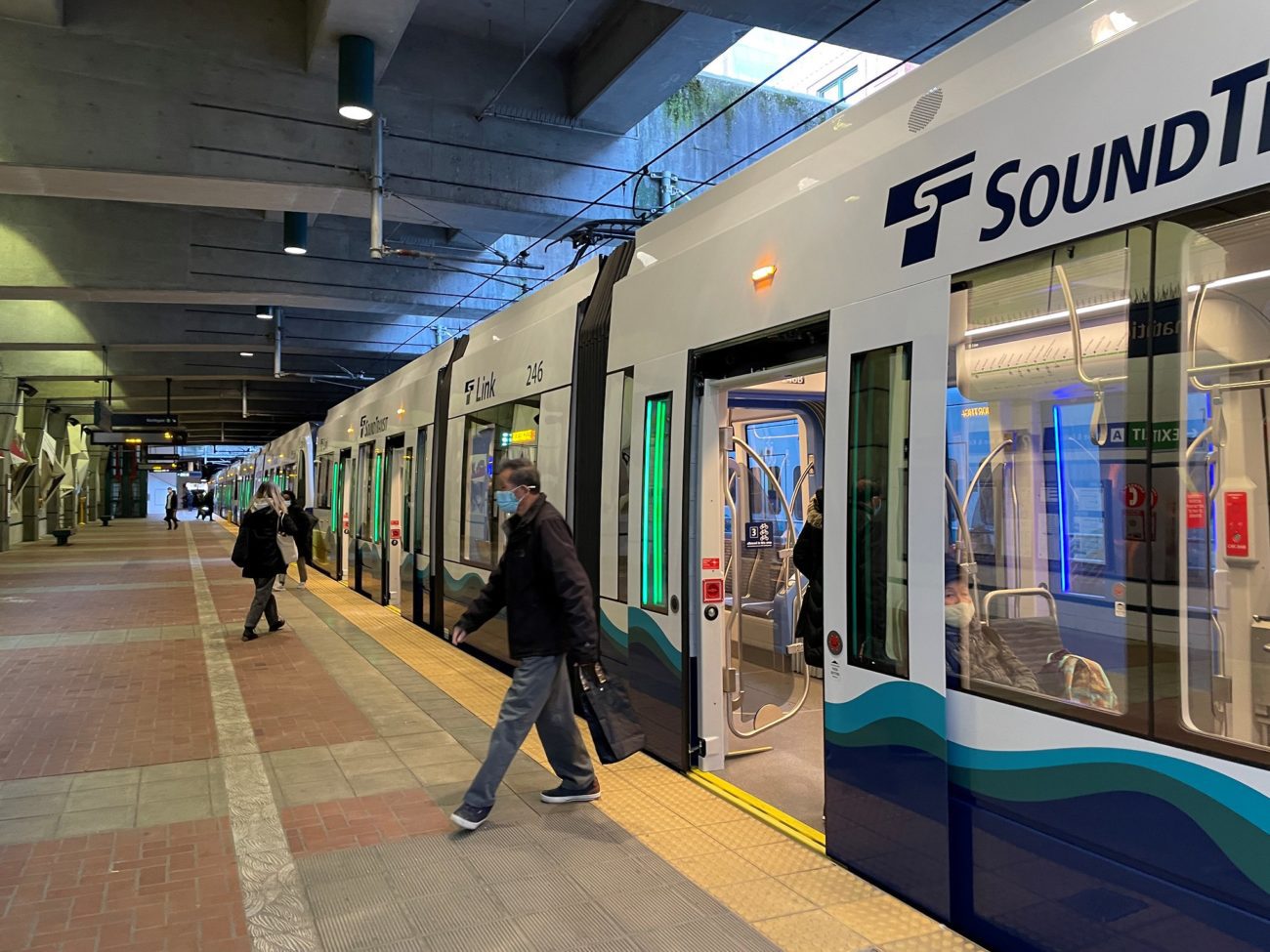
Sound Transit says it has six to seven years to find $9 to $11 billion before the Ballard Link Extension dies.
Sound Transit CEO Dow Constantine told transit reporters at a Wednesday, June 10 press briefing at agency headquarters that the May 28 board vote "did not kill or cancel or delete or defer or postpone the Ballard project." He presented a "Pathway to Ballard" slide showing construction funding for the segment north of Seattle Center to Market Street is not needed until 2033 or 2034, giving the agency a multi-year runway to close the gap through new revenue, cost savings, or both.
For Ballard residents who have paid ST3 taxes since 2017, the cost escalation is severe: the project's price tag has ballooned from $6.8 billion when voters approved ST3 in November 2016 to as much as $23 billion, according to the Seattle Times.
Sound Transit does not expect to reach full design on Ballard Link until 2031. Brad Owen, who heads the capital team designing Ballard and West Seattle Link, pointed to cost reductions on West Seattle Link as a model. That project's estimate fell from $7.1–$7.9 billion in fall 2024 to $4.9–$5.3 billion after design refinements, including eliminating the Avalon Way station.
Some Ballard cost reductions are already in motion: the South Lake Union station was traded for a shifted Denny station, and the Seattle Center station was redesigned to reduce tunneling costs.
But delay carries its own price. Owen said West Seattle Link delays cost $20–$30 million per month from inflation alone. Ballard Link delay costs would be larger given its roughly quadruple budget.
Separately, on Thursday, June 11, the Sound Transit board's system expansion committee gave initial approval for a $16.3 million contract extension with CSP Engineering for continued Ballard Link design work, according to The Urbanist.
The Sound Transit board voted 16-2 on Thursday, May 28 to approve an updated system plan called the Enterprise Initiative. The vote committed $18.1 billion to Ballard Link through Seattle Center and funded $300 million for full design of the entire alignment to Market Street. But it left three unfunded stations with no opening date: Smith Cove, Interbay, and 15th and Market Street in Ballard.
Sound Transit confirmed Thursday, June 11 that it will not break ground on West Seattle Link without a full Federal Transit Administration (FTA) funding grant agreement. The Trump administration has issued no new transit grants since January 2025. A House transportation reauthorization bill includes a 45% cut to new transit and rail grant programs.
The agency's timeline slide shown June 10 listed no release date for the Ballard Link Draft Environmental Impact Statement, though Sound Transit's slide showed Everett Link's DEIS expected this fall.
Seattle City Councilmember Dan Strauss (D6), who also sits on the Sound Transit board, has been the council's loudest Ballard Link advocate. He voted no on the May 28 plan and proposed an amendment to build a Westlake-to-Ballard starter line first, redirecting funds from the second downtown tunnel. The board rejected it 14-4.
"I've lost trust in this agency, in many different ways," Strauss said at the May 28 meeting.
Strauss wrote a May 28 op-ed in PubliCola calling the situation Ballard Link's "biggest threat yet" and noting the extension is projected to serve 148,000 daily riders. The board voted 13-5 on May 28 to require staff to return by Friday, August 1 with a specific date or time range for when light rail will reach Ballard.
No on-record statement from Councilmember Bob Kettle (D7) regarding the June 10 briefing or the Ballard Link funding gap was found in public sources. Kettle is not a Sound Transit board member. Emerald City Wire has requested comment from Kettle's office.
Sound Transit staff must return to the board by Friday, August 1 with a specific date or time range for reaching Ballard's Interbay and Market Street stations. The agency expects to reach "baselining" (when environmental studies are complete and federal grant applications come due) in early 2029. The board also directed staff to develop an adaptive program management plan and project-delivery framework by the end of 2026.
Sound Transit CFO Hughey Newsome said the agency plans to pursue 75-year bonds under the federal TIFIA loan program as one financing tool, after the Washington Legislature rejected granting that authority in 2026.
Readers can access Sound Transit board materials at soundtransit.org.