Seattle police have access to far more surveillance cameras than they ever disclosed. The department built a private-camera registration program without public announcement or City Council approval.
The Seattle Police Department's Real Time Crime Center (RTCC) now draws live footage from 427 cameras and has 893 additional private cameras registered for on-demand access, the Seattle Times first reported Wednesday, Sept. 30. The total of 1,320 cameras far exceeds any figure the city or SPD had previously made public.
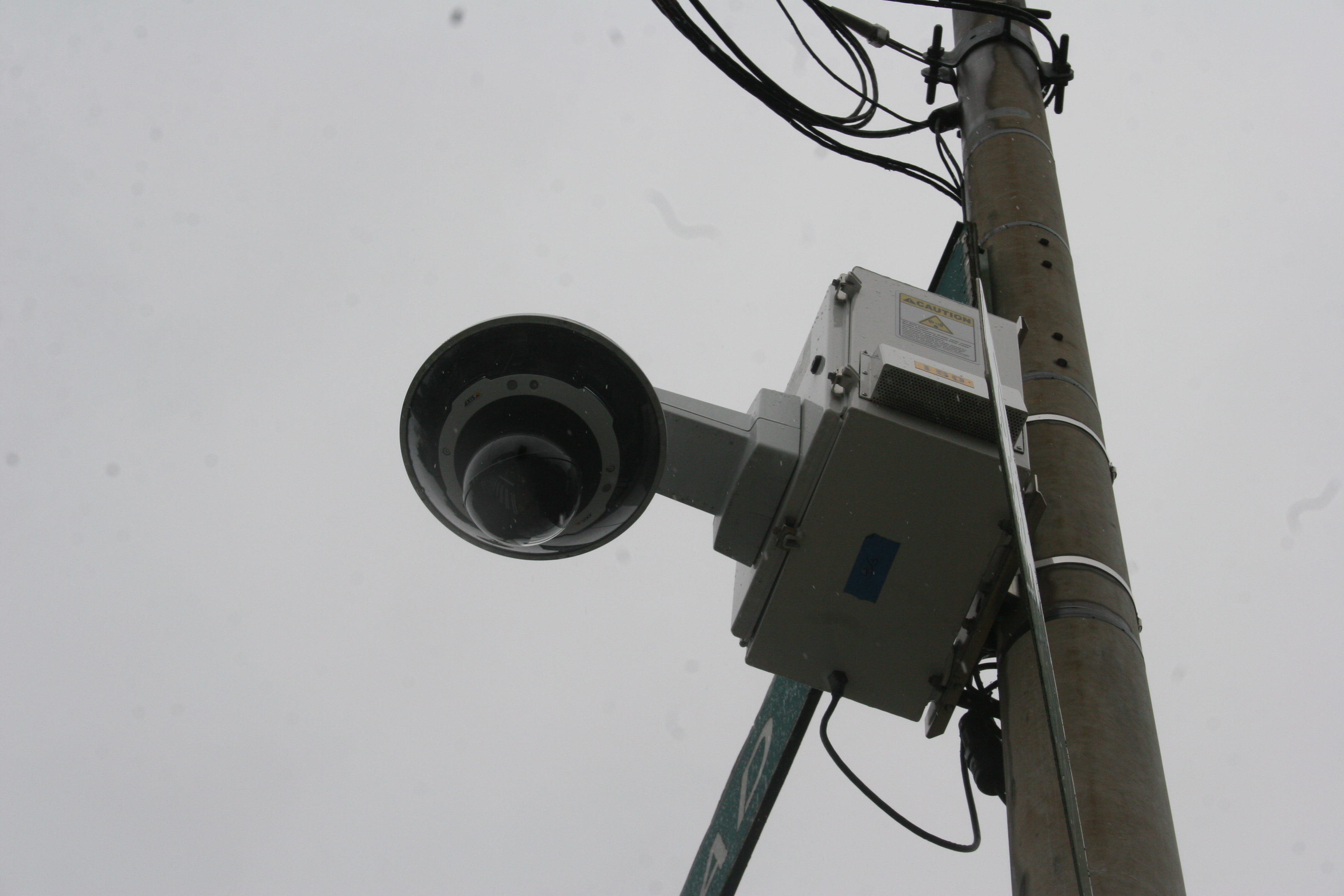
The 427 live feeds include 308 cameras installed by SPD, 96 operated by the Seattle Department of Transportation and 23 owned by three unidentified businesses in the East Precinct. SPD had previously reported 62 camera locations. Each location actually holds five cameras facing four directions plus a pan-tilt-zoom unit, putting the true installed count at five times the disclosed figure.
According to the inspector general's annual surveillance review, many of those cameras sit outside the three areas where the City Council authorized a pilot program in April 2025: downtown, the Chinatown International District and Aurora Avenue North.
A program no one announced
The expansion traces to Connect Seattle, a program SPD launched in April 2025 that lets residents and business owners register their cameras with the RTCC or give analysts 24/7 access to live feeds. Business owners who opt in must purchase an Axon device that enables artificial intelligence searches of their footage. Once connected, RTCC analysts can view those feeds around the clock without the owner's permission.
SPD's chief operating officer at the time, Brian Maxey, emailed the Connect Seattle plan to Councilmember Bob Kettle on March 31, 2025. Kettle chairs the Public Safety Committee and represents District 7, which covers Queen Anne, Magnolia, Belltown and Pioneer Square. Under an October 2024 policy, the plan did not need council or mayoral approval.
The program is not described anywhere on the city's or SPD's websites.
SPD spokesperson Sgt. Patrick Michaud said the department did not announce it because it did not want to advertise for Axon, the private vendor whose technology powers the RTCC.
Inspector general flags gaps
The Office of Inspector General for Public Safety released its annual surveillance review on Wednesday, Sept. 30. The report found that SPD's existing Surveillance Impact Reports treat private camera integration as a "future possibility" and set no criteria for how those cameras should be used.
Inspector General Lisa Judge recommended SPD adopt policies covering where private cameras can be located, how long footage can be retained and what happens if an owner points a camera at a nonpublic space. SPD agreed and said it would propose such policies by March 15, 2027.
The report also found that the Axon Fusus software powering the RTCC has no technical control to prevent or log proactive surveillance. SPD policy prohibits analysts from viewing cameras without a justification such as a case number, but the software does not enforce that rule. The city paid Axon nearly $3.5 million in 2025 for equipment, installation and RTCC personnel.
The inspector general found no instances of improperly shared surveillance data in 2025 and no complaints filed with the Office of Police Accountability regarding SPD's camera use.
Dan Pitts, an audit supervisor with the inspector general's office, said SPD's position is to integrate private cameras from anywhere in the city. "They need to have clearer structure around the organization and criteria and retention," Pitts said.
Kettle says he could "do more"
Kettle acknowledged in a phone interview Wednesday, Sept. 30, that he could "do more in terms of oversight" of the program. He said he plans to speak with police officials and the city's public safety director for a status check on Connect Seattle.
Mayor Katie Wilson's level of knowledge about the program remains unclear. The Seattle Times reported that her office did not agree to an interview or provide a statement.
The inspector general's findings landed two days after a separate city auditor review found SPD had accessed nonpublic SDOT traffic camera streams for months without a formal interagency agreement. Tee Sannon, technology policy program director at the ACLU of Washington, said Tuesday, Sept. 29, in response to the city auditor's traffic-camera findings: "There are not really any sort of protections or safeguards in place … This was the concern from the start."
An independent privacy review of the RTCC by the New York University Policing Project, originally expected by late September, is now expected near the end of October, according to Fox 13 Seattle.