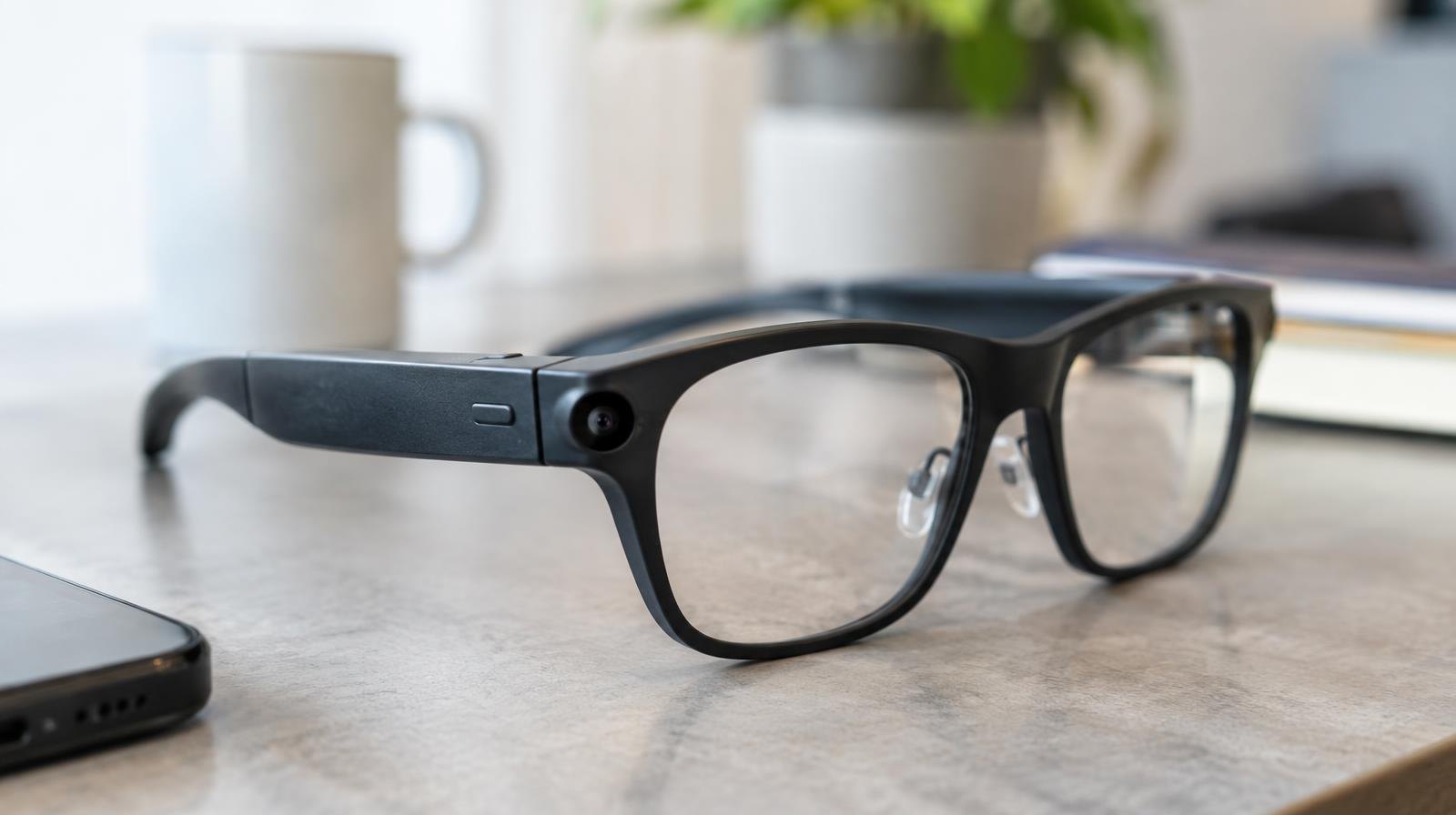
A Seattle police officer filmed weapons lockers, a precinct interior and an active investigation while wearing Chinese-made AI smart glasses. He then let the manufacturer use the footage as a social media ad.
Officer Adam Sun is on administrative leave after the Seattle Police Department learned he recorded the promotional video for Rokid Global, a Chinese company whose glasses feature facial-recognition technology. Someone filed a complaint with the city's Office of Police Accountability (OPA) on Sept. 10, and SPD removed Sun from duty, PubliCola first reported on Tuesday, Sept. 29.
The footage, shot from Sun's point of view, showed scenes inside a police precinct, around SPD weapons lockers, inside his patrol car and at an active investigation. Rokid posted the video on its Facebook page and other social media platforms earlier in September. The footage has since been removed.
The incident raises four distinct policy and legal concerns for Seattle residents.
Department policy violations
SPD's own manual states that sworn employees may not wear personally owned camera devices. The manual also bars officers from recording enforcement activity on duty with smart glasses. A citywide rule prohibits the use of unapproved artificial intelligence tools.
A department-wide ban
Assistant Chief Rob Brown responded by issuing an immediate directive to all SPD personnel. The order bars anyone in the department from using personally owned recording devices, including Meta glasses, Rokid glasses and digital recorders, to capture video or audio while on duty. Any existing posts made with such devices must be removed. Exceptions require approval from an assistant chief or above for a specific law enforcement need that body-worn cameras cannot meet.
The directive applies across all precincts, including the North Precinct serving Ballard and the West Precinct covering Queen Anne and Magnolia.
State facial-recognition law
Rokid markets its glasses' thermal facial-recognition function as a tool that lets officers identify offenders almost instantly. In China, that capability is a core selling point. Washington's facial-recognition law (RCW 43.386) prohibits law enforcement from using the technology for real-time identification without a warrant or exigent circumstances. Whether Sun activated any facial-recognition feature has not been disclosed.
Security concerns
A Malwarebytes report published Sept. 22 found that some inexpensive smart glasses transmitted voice, text and images to a server in Shenzhen, China. Researchers identified more than a dozen security flaws, including insecure Bluetooth pairing that could let an attacker capture photos or recordings. The report tested different brands, not Rokid specifically.
PubliCola reported that if Sun received payment from Rokid for the video, that could raise additional concerns given China's status as a U.S. adversary. Whether Sun was compensated has not been confirmed.
SPD declined to answer questions beyond confirming Sun's leave status and referred inquiries to the OPA, PubliCola reported. The OPA confirmed the complaint exists. No timeline for the investigation's conclusion has been disclosed.