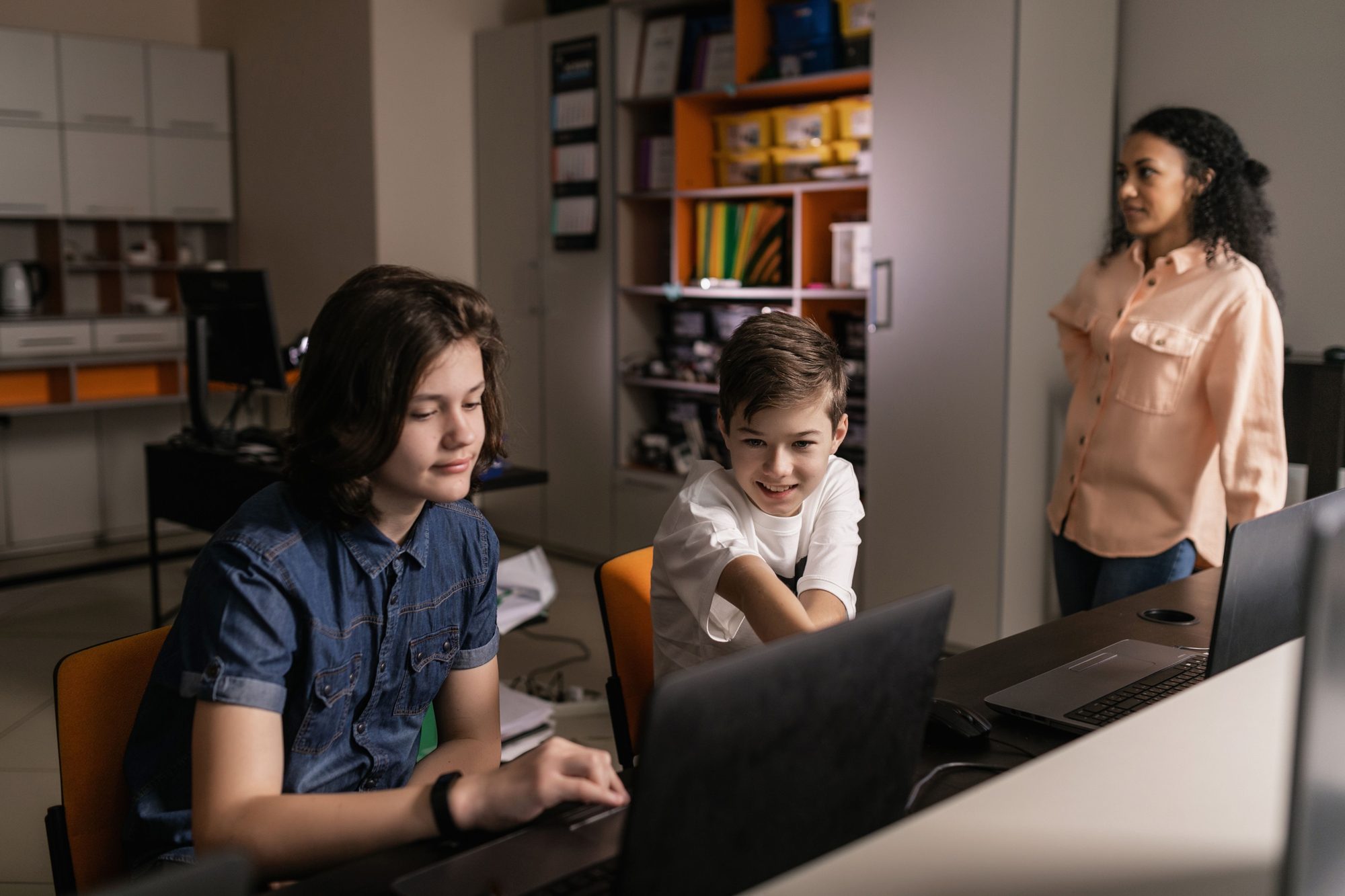
A student at Rainier Beach High School or Cleveland High School STEM can open MagicSchool AI on a district-issued laptop.
In New York City, that same tool is banned.
Seattle Public Schools has published ethical AI use guidelines and a handbook for parents, students and instructors, giving students access to tools including MagicSchool AI, Canva and Adobe Firefly on district devices.
The approach puts SPS on the opposite end of a national divide from the country's two largest districts: New York City announced a yearlong ban on generative AI for elementary and middle school students as the 2026-27 school year began, and Los Angeles temporarily blocked AI access on student devices across all grades while officials develop a policy, the Seattle Times reported.
The question of how schools handle AI is sharpening. A study published in JAMA Pediatrics in June found that about 8.2 million Americans ages 12 to 21 used an AI chatbot for mental health advice in 2025, up nearly 50% from the prior year. Nearly two-thirds of those users had not told anyone, Seattle's Child reported.
A state law already on the books
Washington is not leaving the question to districts alone. A law signed by Gov. Bob Ferguson took effect Jan. 1, requiring AI chatbot operators to notify minors they are interacting with AI at the start of every session and at least once per hour. Operators must block sexually explicit content and suggestive dialogue with minors and use "reasonable measures" to prevent manipulative engagement techniques.
The law has teeth. If any user seeks mental or physical health advice, the chatbot must disclose it is not a healthcare provider. Operators must also create protocols for detecting self-harm and suicidal ideation and provide crisis-service referrals. Violations are enforceable under Washington's Consumer Protection Act.
UW law professor Ryan Calo told GeekWire the law will be "blood in the water for the plaintiffs' bar" because noncompliance could be treated as negligence per se, giving consumers a private right of action.
SPS spending and screen-time tension
SPS spends about $21 million annually on digital efforts out of a $1.3 billion budget, with more than 50 ed-tech apps running on district-issued devices, according to Seattle Times reporting.
Superintendent Ben Shuldiner told the Seattle Times in August 2026, discussing screen-time concerns in classrooms: "If we are going to use technology, it needs to be for a good purpose."
The state Office of Superintendent of Public Instruction, led by Chris Reykdal, has encouraged what it calls a "Human-AI-Human" approach in K-12 schools, framing AI as a tool educators should teach students to use safely.
Industry moves add pressure
On Sept. 15, Microsoft and the American Federation of Teachers (AFT) announced a legally binding AI safety and privacy standard for schools, as the Associated Press reported. The agreement, effective Nov. 1 for all Microsoft school contracts, prohibits using student data to train AI and bans features that foster emotional attachment or dependency.
AFT President Randi Weingarten said at the Sept. 15 news conference, according to the AP, "We want parents to have control of their kids' education. We want educators to have control of kids' education, not ed tech."
OpenAI and Anthropic said they were discussing similar pacts with the AFT. Google, which turned on its Gemini chatbot for many K-12 students in August 2026, has not said whether it will offer similar protections. Google Classroom serves 150 million teachers and students worldwide.
Seattle Schools week ahead
Tuesday, Sept. 22, 6:30 p.m. — Free Seattle Times panel on AI and youth mental health at Seattle Central College's Broadway Performance Hall, 1625 Broadway Ave., Capitol Hill. Panelists include Alexis Hiniker of the UW Information School, Grin Lord of Seattle-based mpathic.ai and Rio Hindami of Seattle Roots Community Health in SPS. Registration required.