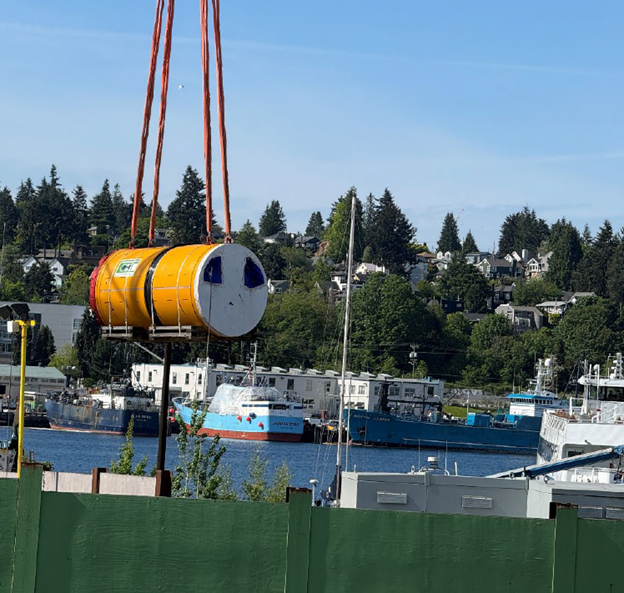
If you park on NW 56th Street in Ballard, check the signs. A 7-foot tunnel boring machine is grinding westward beneath the pavement this month, and Seattle Public Utilities is now strictly enforcing no-parking zones along the street to keep crews connected to underground monitoring equipment.
The machine's second tunneling phase marks a new chapter for the Ship Canal Water Quality Project, a joint SPU and King County effort to stop sewage and polluted stormwater from spilling into Salmon Bay, Lake Union, and the Lake Washington Ship Canal during heavy rains. The project cost was estimated at $710 million in a mid-2024 SPU update.
The system, due to be operational in 2027, is expected to reduce those discharges by roughly 84 percent and keep more than 75 million gallons of pollution out of local waterways each year, according to EPA project records.
Construction along Shilshole Avenue NW resumed after the FIFA World Cup construction moratorium ended and the work area was returned to traffic July 8. Seattle's Department of Transportation had paused most street-level work from June 8 through July 7 while the city hosted six matches at Lumen Field.
The tunnel boring itself never stopped underground; the machine passed beneath NW Market Street during that window, My Ballard reported.
Now in phase two, the machine is heading west along NW 56th Street toward 28th Avenue NW, where crews in July finished excavating a diversion structure and poured its concrete base. SPU expects a breakthrough at that intersection before year's end.
What drivers and residents should expect
Along Shilshole Avenue NW, where crews are installing the Ballard pump station discharge pipe, one lane in each direction will stay open during work hours, though flaggers and lane shifts are likely.
At 24th Avenue NW and NW 56th Street, one northbound and one southbound lane remain open; that work zone is scheduled to stay in place through spring 2027.
Tunneling runs 6 a.m. to 6 p.m., six days a week, Saturdays included. The 7-foot-diameter machine is operated remotely by a surface crew of six to 10 people, according to an SPU construction bulletin. In a June 4 update, SPU told neighbors they "likely won't notice anything as the tunnel machine is working" because most heavy equipment is contained within the pump station site's construction walls.
The pump station itself is taking shape. Crews are pouring concrete floors and walls inside and installing rails for an internal crane, while exterior walls, steel framing, and roof decking go up outside. Once complete, the station will push stored stormwater and sewage through discharge pipes to King County's West Point Wastewater Treatment Plant in Magnolia, near Discovery Park, for treatment.
Why it matters for the waterways
In 2018, 84 percent of Seattle's combined sewer overflows came from the systems serving Crown Hill, Ballard, Fremont, Wallingford, Queen Anne, Downtown, and Capitol Hill, according to then-District 6 Councilmember Dan Strauss's December 2024 year-in-review.
The finished project's 2.7-mile storage tunnel, completed in June 2023 by the larger boring machine "MudHoney," can hold 29 million gallons during storms until the treatment plant is ready to process it.
The EPA expects the system to cut combined sewer overflows to an average of one per year or fewer at all six affected outfalls.
Air quality alert through Wednesday
The National Weather Service issued an air quality alert for King County effective 12 p.m. Monday, August 3 through 5 p.m. Wednesday, August 5, due to wildfire smoke from fires in British Columbia and North-Central Washington. Particulate matter may reach "Unhealthy for Sensitive Groups" levels. Increasing onshore flow later in the week is expected to clear the smoke.
Residents with questions about the Ship Canal project can call SPU's hotline at (206) 701-0233 or email [email protected].