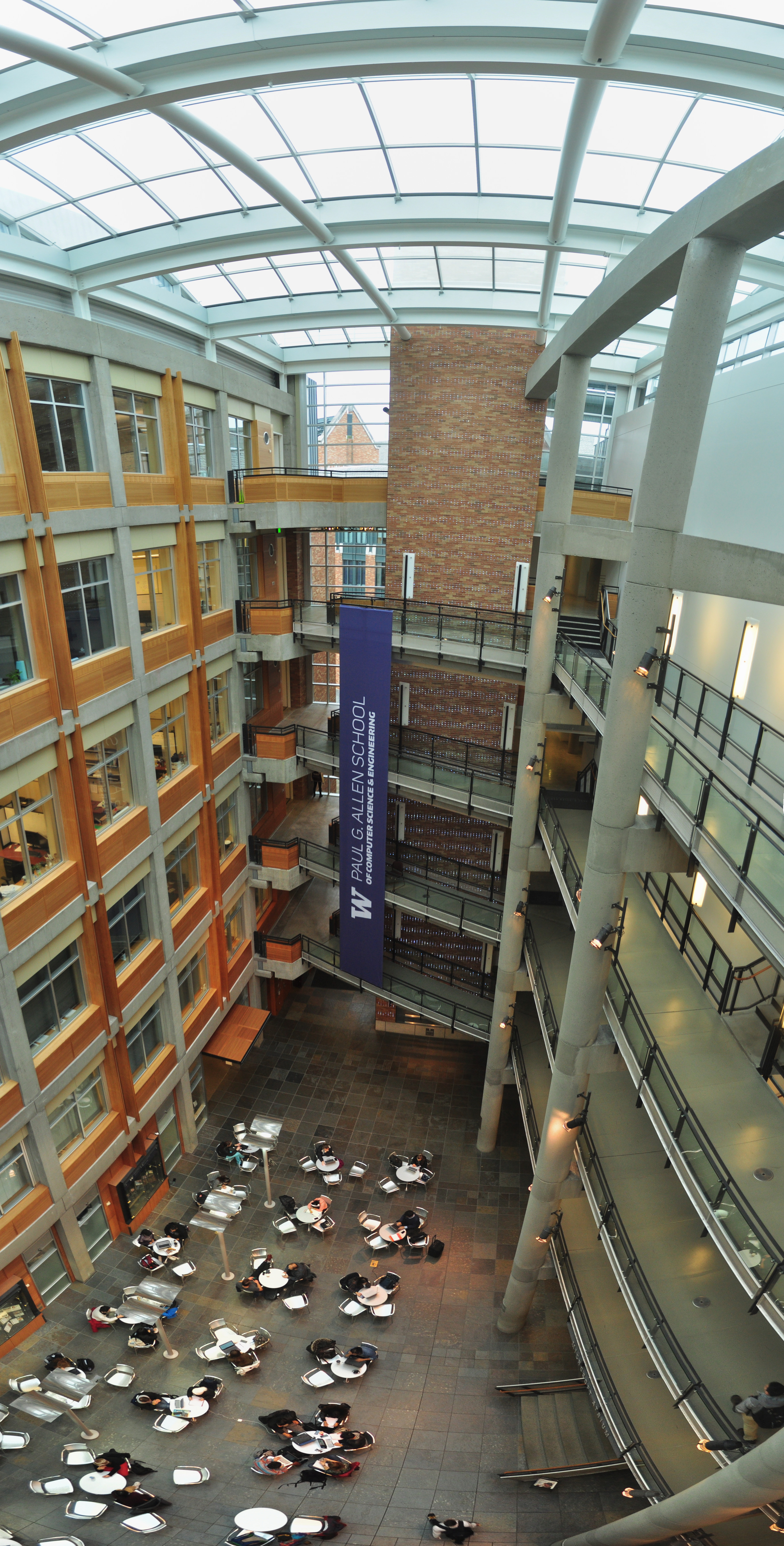
The Paul G. Allen School of Computer Science & Engineering could become an independent, college-level unit at the University of Washington after a task force recommended splitting it from the College of Engineering.
The nine-member task force released its report the week of Oct. 19, concluding that UW's successes in computing, data science and artificial intelligence have come "not because of the organizational structures we have in place but in spite of them," as first reported by GeekWire.
No decision has been made. UW President Robert J. Jones and Provost Tricia Serio said in an Oct. 19 letter to the university community that they are forming two implementation committees to study the proposal.
Both committees are due to report by the end of winter quarter 2027, with next steps planned for spring 2027.
For Seattle's tech workforce, the stakes are concrete.
Nearly 100 Allen School graduates from the 2025-26 class went to work full time at Amazon, and more than 70 joined Google, Microsoft or Meta, according to a school survey.
Graduates went to more than 150 companies in all.
What independence would mean
As a standalone school, the Allen School would control its own tuition revenue and research-grant funding directly, rather than receiving those funds through the College of Engineering.
Its leader would also gain a seat on UW's Board of Deans and Chancellors.
Allen School faculty voted 83-0 in late September to support moving forward with the process. Thirteen faculty members did not vote because they were absent or on leave, according to the school.
The task force report described a "difficult relationship" between the Allen School and the College of Engineering, along with "significant distrust" across campus over resources and priorities.
Engineering Dean Nancy Allbritton pushed back on that characterization in a statement to GeekWire, calling the relationship "complex rather than difficult."
Impact on the College of Engineering
The College of Engineering would lose its largest unit. The Allen School awarded 894 of the college's 3,132 degrees in 2025-26 and accounts for a little more than a quarter of the college by degrees, enrollment and faculty, according to college figures.
The task force acknowledged the separation would carry significant short- and long-term financial implications and suggested options such as permanent financial support for Engineering to offset the loss.
Allbritton said the college is committed to helping shape an outcome that strengthens both the College of Engineering and computer science as an independent discipline.
A second proposal: campus-wide federation
The task force also recommended creating a Federation of Information, Computing and Society to coordinate computing, data science and AI work across UW, including fundraising and hiring across departments.
The report recommended that the Allen School's separation not be finalized until the federation is running, noting that other campus units worried the Allen School would win independence while the federation never received real resources.
The report described the federation as a possible transitional phase toward a full College of Computing at UW and recommended revisiting that idea in about five years.
Roots in Paul Allen's gift
The prospect of independence traces to 2017, when a $40 million gift from Microsoft co-founder Paul Allen turned UW's computer science department into the Allen School.
The gift agreement said the school would remain a unit of the College of Engineering "at least for the time being," according to a copy obtained by GeekWire, and anticipated it could someday become a free-standing school or college.
Interim Director Dan Grossman, who took over in August after Magdalena Balazinska's nearly seven-year term as director ended, has been invited to participate in the Board of Deans and Chancellors.
He said there are no planned changes to the Allen School's structure, staffing, budget or degree programs while the committees do their work.
Any changes would still need approval from UW's Faculty Senate and Board of Regents, with a goal of implementation by the end of the 2027-28 academic year.