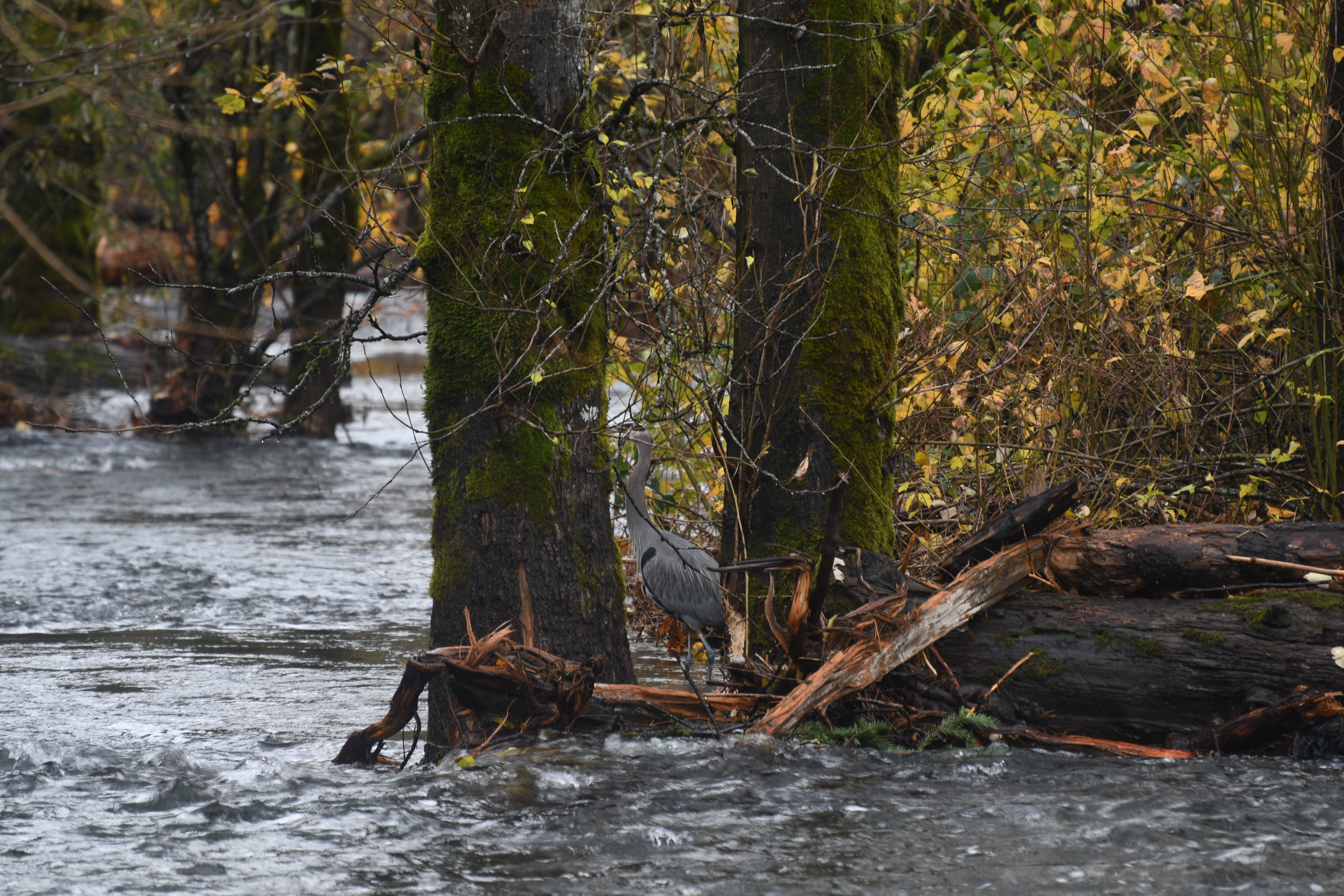
A 63-nest great blue heron colony near the Ballard Locks faces potential disruption from a proposed luxury car-and-yacht club on the adjacent waterfront.
Friday, June 26, is the last day for public comment on the project.
Heron Habitat Helpers, a Ballard nonprofit, submitted formal comments to the City of Seattle on Monday, June 22, asking the Seattle Department of Construction and Inspections to require additional environmental review of the Terminal One Motor + Yacht Club proposed at 2750 W. Commodore Way.
The group says the nearly 9-acre site sits next to the Commodore Park heron colony, which it describes as Seattle's largest great blue heron nesting colony.
The project, developed by Cantera Group, would include a marine sales building, bulkhead, boardwalk, docks, a 75-car parking lot, and 100 commercial garage condominiums (individually owned collector-car storage units) starting at $600,000.
Cantera principal Doug Ciserella has described the project as answering "a growing demand for a facility that will forever celebrate both land and water motor works."
The nonprofit's central concern: the proposal calls for removing existing piers, floats, and pilings that herons currently use as pre-breeding staging habitat.
According to the group's comments reported by My Ballard, herons gather on those structures to display courtship behavior and establish pair bonds before moving into the nesting colony.
The city's own Director's Rule 13-2018 explicitly names "the dock located at 2750 W. Commodore Way" as part of a designated great blue heron pre-nesting area. The rule establishes a 197-foot year-round buffer around nesting colonies and a 300-foot seasonal buffer, though whether the Terminal One project boundary falls within those distances has not been publicly confirmed.
The rule also restricts high-noise construction in the Commodore Park management area to September through December.
Heron Habitat Helpers is asking the city to clarify how the rule applies to this proposal, require a wildlife biologist evaluation, prohibit high-noise construction during nesting season (February through August), and mandate year-round buffer protections to reduce lighting, noise, and vibration near the colony.
Under Director's Rule 13-2018, SDCI cannot approve permits for activities within the heron management area until it receives either a Standard Management Plan from the applicant or an Alternative Management Plan approved by the Washington Department of Fish and Wildlife.
No city response to the nonprofit's comments has been reported. District 6 Councilmember Dan Strauss, who represents Ballard, has not publicly commented on the issue.
Residents can submit comments through the Seattle Services Portal under permit number 26CAP-00000-01VLJ before the comment period closes Friday, June 26.