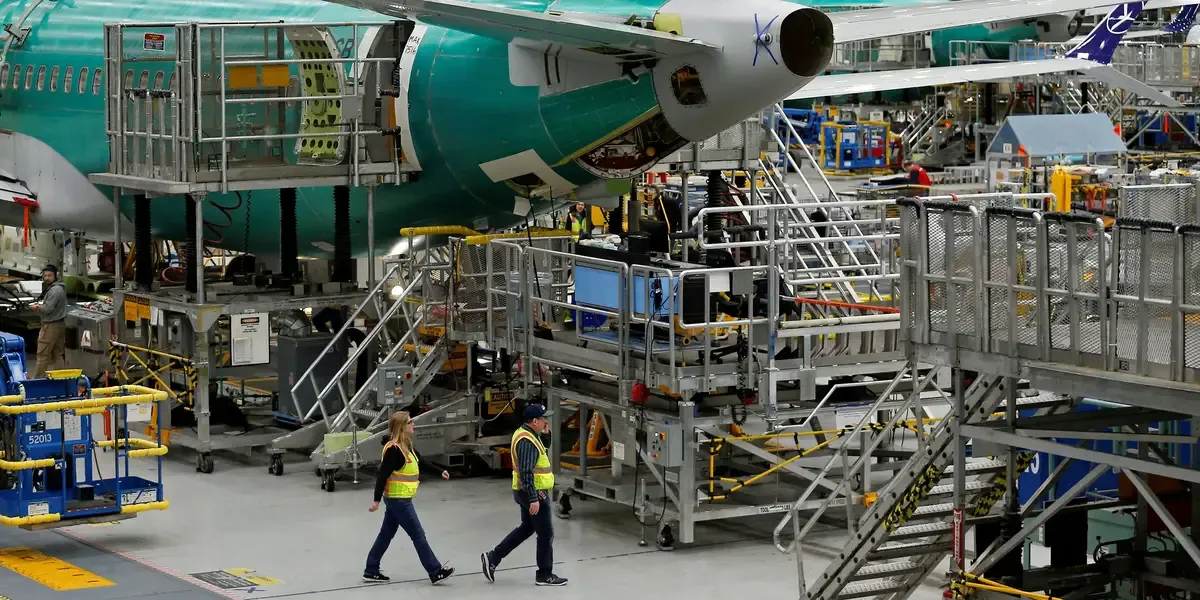
Boeing's engineering workforce sat down with management to negotiate a new contract for the first time since 2013.
The outcome will shape whether roughly 17,000 engineers, scientists, and technicians in the Puget Sound region stay at a company that needs them to certify its next generation of aircraft.
The Society of Professional Engineering Employees in Aerospace (SPEEA), which represents about 20,000 workers across five states, opened formal talks with Boeing at locations in the Seattle area. The current contracts expire October 6.
If no deal is reached, the union could strike, halting the engineering-intensive certification work Boeing needs to deliver the 737 MAX 7, MAX 10, and 777-9 to customers.
These talks are Boeing's third major contract negotiation in three years, according to Reuters. The previous two covered commercial aircraft workers and defense workers represented by the Machinists union. Both ended in extended strikes.
Mike Berryhill, a production systems engineer in Everett who serves on SPEEA's negotiation team, framed the challenge in a union press release: the bargaining covers "a large cadre of frustrated experienced professionals, who for decades warned their managers that if Boeing continued down the path it was on, it would lead to major problems," alongside younger engineers who joined expecting a cutting-edge employer and instead found a culture they say prioritized shareholders over quality.
"These are going to be challenging negotiations, both for Boeing and our union," Berryhill said.
SPEEA's professional unit covers about 13,000 engineers and scientists. Its technical unit covers about 4,000 analysts, technicians, planners, and specialists. The union is seeking what it calls "market-leading compensation," better benefits, more flexible work arrangements, increased overtime and on-call pay, enhanced retirement security, and a clear layoff process. No specific wage percentage has been disclosed.
Ben Nimmergut, Boeing's vice president and functional chief engineer for production engineering, wrote to SPEEA members on Tuesday, June 30, acknowledging that "some companies currently offer higher base salaries" but pledging a "highly competitive" total compensation package.
He also warned against a work stoppage, telling Reuters: "The dollars we'd spend executing a contingency plan could instead be invested in all of you as we work toward a strong contract offer."
On flexible work, Nimmergut said Boeing would empower managers to accommodate employees but maintained that in-person collaboration remains essential.
Boeing laid off more than 400 SPEEA professional unit members in 2024 as part of a 10% workforce reduction. In July 2025, the company reinstated 58 of those workers and paid back wages after SPEEA alleged Boeing had retained nonunion contractors in the same roles.
The 2024 Machinists strike, which shut down Boeing's Renton and Everett factories for 53 days, ended with a 38% general wage increase over four years (compounding to roughly 43%). SPEEA members watched that outcome closely.
Meanwhile, Boeing is ramping production. A fourth 737 MAX assembly line opens in Everett on Monday, July 6. As of CEO Kelly Ortberg's announcement on Friday, June 27, the company was building 47 MAX planes per month and targeting 63. FAA Administrator Bryan Bedford told Reuters in May 2026 that he expects the MAX 7 to be certified by the end of summer 2026, followed by the MAX 10 by year's end.
Boeing needs its engineers to hit those milestones. The engineers know it.
Talks will continue regularly until Boeing presents formal offers. Emerald City Wire will follow the negotiations as they develop toward the October 6 deadline.
Boeing Calendar: July 1–7
- Wednesday, July 1 — Boeing-SPEEA contract negotiations begin at Seattle-area locations. Covers wages, benefits, and work arrangements for ~17,000 Puget Sound engineers and technicians.
- Monday, July 6 — Boeing opens its fourth 737 MAX production line (the "North Line") in Everett. CEO Kelly Ortberg said the first plane will be loaded that day.