The D Line bus connecting Queen Anne to Ballard could run every 10 minutes on weekends instead of every 15.
That's the promise at the center of a $138 million-per-year transit tax renewal now moving through the Seattle City Council, where competing amendments from District 7's Bob Kettle and District 6's Dan Strauss threaten to reshape the measure before voters see it in November.
The council's Select Committee on Seattle Transportation Benefit District is scheduled to hold a briefing, discussion, and possible vote on Council Bill 121226 on July 6.
A public hearing follows July 13 with a final committee vote set for July 16. The bill must clear the council by mid-July to land on the November 3 ballot.
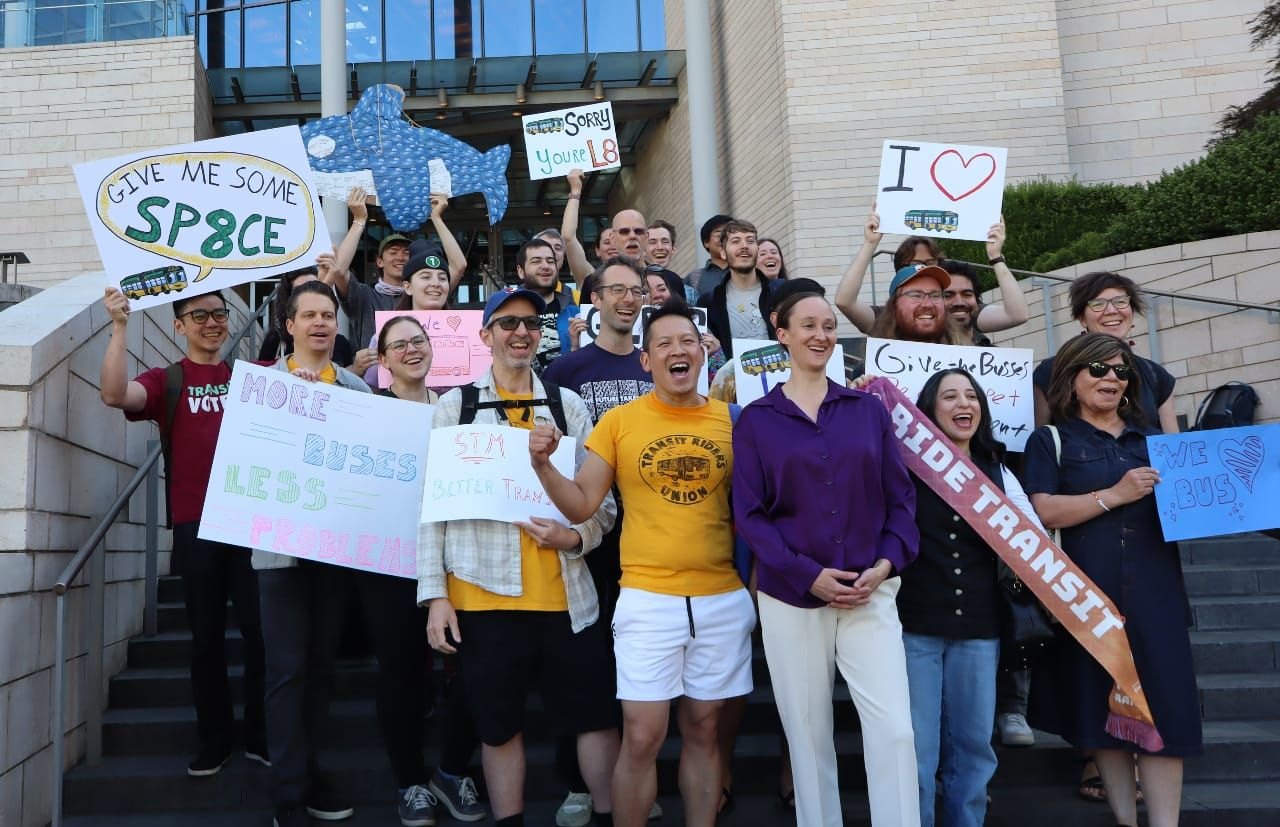
Mayor Katie Wilson rallied supporters on the steps of City Hall on June 18, making the case for doubling the existing Seattle Transit Measure (STM) sales tax from 0.15% to 0.3%, the maximum allowed under state law. The renewed measure would run 10 years through 2036.
"What's more regressive than a sales tax? It's cuts to public transit," Wilson told the crowd. "What is regressive is having to wait half an hour for the bus that's going to get you home to your kids every evening."
The tax increase would cost a median two-person Seattle household an additional $29 annually, bringing the total to $58 per year, according to the council's select committee presentation. That estimate assumes household income of $121,000. For a low-income household earning $38,000, the increase is $17, to $35 per year.
Under Wilson's proposal, city-funded annual service hours at King County Metro would jump from 176,000 to 280,000, a 60% increase enabling frequency improvements on 10 to 15 routes citywide. The measure would also expand the low-income ORCA card program from 10,000 to 22,000 passes annually and continue funding Seattle's two streetcar lines.
Without the doubling, service would actually shrink. Council central staff analysis shows that inflation and near-exhausted reserves mean a flat renewal at 0.15% would require cutting Metro service. Holding 2026 service levels constant would take a 0.223% rate, roughly half the increase Wilson proposes.
The tax rate itself appears safe. No council member has moved to lower it. The fight is over where the dollars go.
Kettle, who chairs the Public Safety Committee, wants to restore language requiring spending on safety and security investments on Metro buses and streetcars. The proposed renewal drops safety-spending language that Committee Chair Rob Saka added to the current STM last year. Kettle argued at the June 18 hearing that "the service needs to be safe" and pointed to decisions made during COVID that "really impacted the safety on our system."
Strauss is pushing for the renewal to direct service specifically to Ballard, where the conversion of Route 17X to a peak-only route left the D Line and Route 40 as the only all-day connections to downtown. His argument gained urgency after the Sound Transit board voted 16-2 on May 28 to fund the Ballard Link Extension only to Seattle Center, leaving the extension to Market Street unfunded and unscheduled.
"The closest to Ballard that the most frequent transit gets is Leary and 15th, which is in an industrial zone," Strauss said at the June 18 hearing. "It's not near housing, it's not near the center of Ballard."
At-large Councilmember Alexis Mercedes Rinck arrived late to the same hearing after visiting striking workers at the Hilton Embassy Suites in Pioneer Square. She focused her questions on protecting late-night bus service for hospitality workers.
Monday, July 6 — Select Committee on Seattle Transportation Benefit District: briefing, discussion, and possible vote on CB 121226. Presenter: Amanda Allen, Council Central Staff. Key accountability targets: Chair Rob Saka, amendment sponsors Kettle and Strauss.
Monday, July 13 — All-day public hearing on the STM renewal.
Thursday, July 16 — Full committee vote to finalize the STM package for the November 3 ballot.