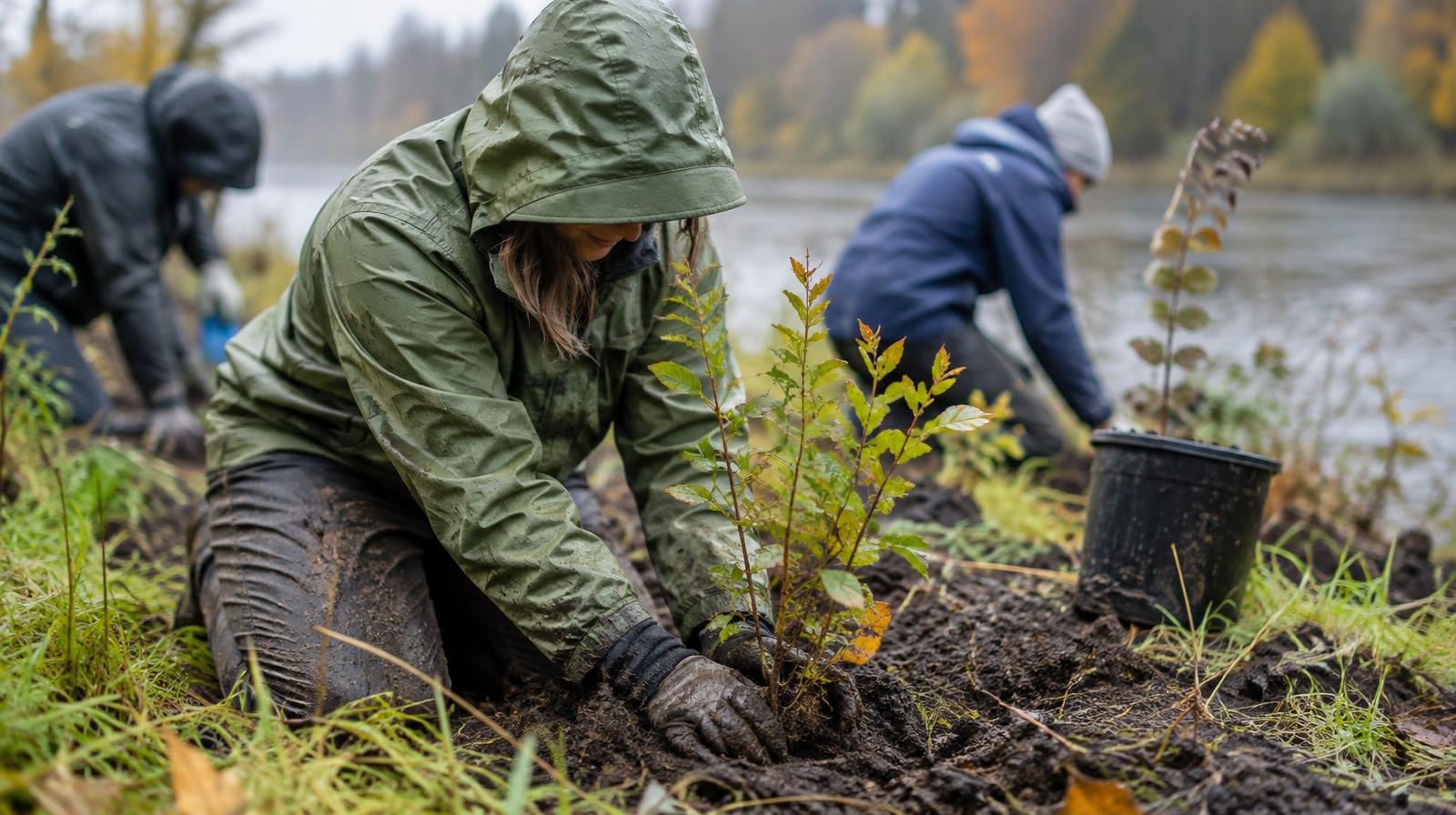
Hundreds of volunteers planted native species and pulled invasive weeds along the Duwamish River on Saturday, Oct. 17. Seattle's only river is a federal Superfund site running through some of the city's most pollution-burdened neighborhoods.
The work party marked the 20th anniversary of the Duwamish Alive Coalition, which has organized twice-yearly volunteer events across the watershed since its first Earth Day gathering in 2006. Volunteers spread out across multiple sites stretching from West Seattle to Tukwila, according to West Seattle Blog.
At White Center Heights Park, a welcoming ceremony drew elected officials and coalition leaders despite light rain. Sharon Leishman, who leads the Duwamish Alive Coalition, spoke about the group's two decades of restoration work and how the river connects communities across the region.
King County Executive Girmay Zahilay used the event to launch the King County Volunteer Corps' inaugural Regional Day of Service. In an Instagram post before the event, Zahilay said the county is "making volunteerism a core part of how we bring residents together to solve problems and care for our communities."
He brought his daughter Jazzy.
Port of Seattle Commissioner Hamdi Mohamed and King County Natural Resources and Parks deputy director Tricia Davis also spoke at the ceremony, both addressing the role of government in environmental stewardship. Several of the riverfront parks where Duwamish Alive hosts events sit on Port of Seattle land.
Before volunteers picked up shovels, Leishman presented the speakers with copies of Tom Reese's book "Once and Future River: Reclaiming the Duwamish," a photographic exploration of the river that was declared a Superfund site in 2001.
The Duwamish River's lower five miles were turned into a straightened channel over the past century. Separately, industrial discharges and overburdened storm-sewer drains contaminated the waterway, according to the coalition's website.
The river ecosystem supports five salmon species, including threatened Chinook salmon, along with river otters, beavers, bald eagles and blue herons. Restoration sites along the river provide some of the only places where levees and armoring do not block tidal flows, creating resilience against sea-level rise in flood-prone neighborhoods along the waterway.
The coalition says "years of social and environmental injustices" allowed toxic contamination and lax cleanup standards that "left their mark on the low income communities along the Duwamish."
South Park and Georgetown, two neighborhoods along the river, bear a disproportionate burden from that industrial legacy.
The next Duwamish Alive work party is expected in spring 2027.
Residents who want to volunteer before then can find opportunities through the Green Seattle Partnership or join the King County Volunteer Corps through the county's volunteer portal.