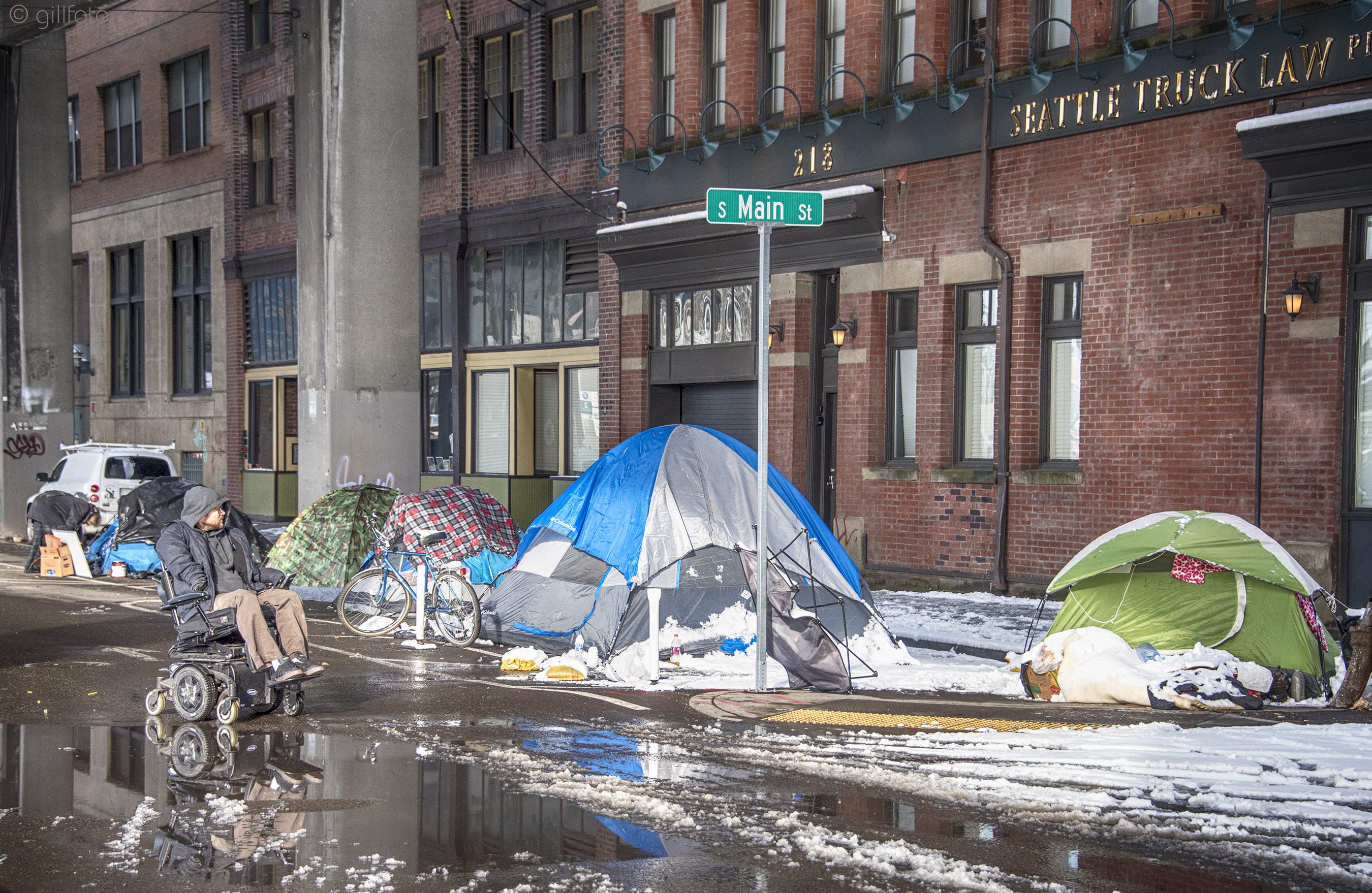
Nearly 12,000 people are sleeping in tents, cars, and doorways across King County on any given night. That's 2,000 more than two years ago.
The King County Regional Homelessness Authority released its 2026 Point-in-Time Count on Tuesday, June 23, estimating 18,365 people experiencing homelessness countywide. The overall number rose 9% from 16,868 in 2024. But the sharper figure: the unsheltered population jumped 21%, from 9,810 to 11,829, because the region actually lost shelter capacity over the past year.
Shelter beds countywide dropped nearly 12%, from 5,958 in 2025 to 5,269 in 2026, driven in part by cuts to family shelter. The result is that 64% of all homeless individuals in King County are now living outside.
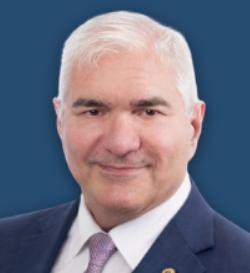
"Every year, thousands of people exit homelessness into housing, while thousands more enter because housing remains out of reach for too many people in our community," KCRHA CEO Dr. Kelly Kinnison said. "The challenge before us is not simply responding to homelessness, but reducing the conditions that cause people to lose housing in the first place."
The count was conducted between January 26 and February 6 using a statistical sampling method developed with the University of Washington, rather than a traditional single-night volunteer count.
The Bayside Enhanced Shelter at 1551 W. Armory Way in Interbay opened June 9 with 75 prefabricated pallet-home units. As of June 17, only five residents were inside. A city spokesperson told Seattle Red that intakes would proceed at seven to 10 people per week, with full occupancy of 75 expected by August. Each 70-square-foot unit cost roughly $16,000 to build.
Mayor Katie Wilson set a goal of 500 new shelter beds by mid-June and 1,000 by year's end. She delivered 75, all in Interbay.
Wilson told Axios the numbers reinforce the scale of the problem: "We're simply not doing enough to keep up with the scale of our housing and homelessness crisis."
The unsheltered count rose even as KCRHA's stated mission is to move people indoors. A forensic audit released in April found the agency could not account for roughly $13 million in public funds and had accumulated a $65 million deficit. King County ordered a 90-day review in May to evaluate whether to continue, modify, or terminate its participation in KCRHA.
Mayor Wilson and King County Executive Girmay Zahilay announced they would embed an independent financial analyst inside the agency.
Around 18,000 people enter King County's homelessness system each year while roughly 17,000 exit it, according to KCRHA data. King County experienced a record 8,732 evictions in 2025, a 12% increase from 2024. 46 per cent of county renters are rent-burdened, paying 30 per cent or more of income toward housing.
UW housing researcher Gregg Colburn, whose work identifies Seattle as one of eight high-cost U.S. cities with almost no margin for housing instability, told KING 5: "If you get kicked out of your apartment, or get into a fight with your roommate, or lose your job [in Seattle], there are no places to move to, and if there are it might cost $2,000 a month."
The Seattle Human Services Department announced an $8 million Request for Proposals on June 17 for homelessness prevention services: $6.5 million for rental assistance and case management, $627,000 for legal services for households facing eviction, and approximately $900,000 for centralized application management.
The program expects to serve about 1,000 households per year beginning in 2027.
No neighborhood-level data for Queen Anne, Magnolia, or Ballard was included in the KCRHA report.
King County's 90-day review of KCRHA, ordered in May, is due in August. Councilmember Bob Kettle represents District 7, which includes Interbay, Queen Anne, Magnolia, Belltown, and Pioneer Square.