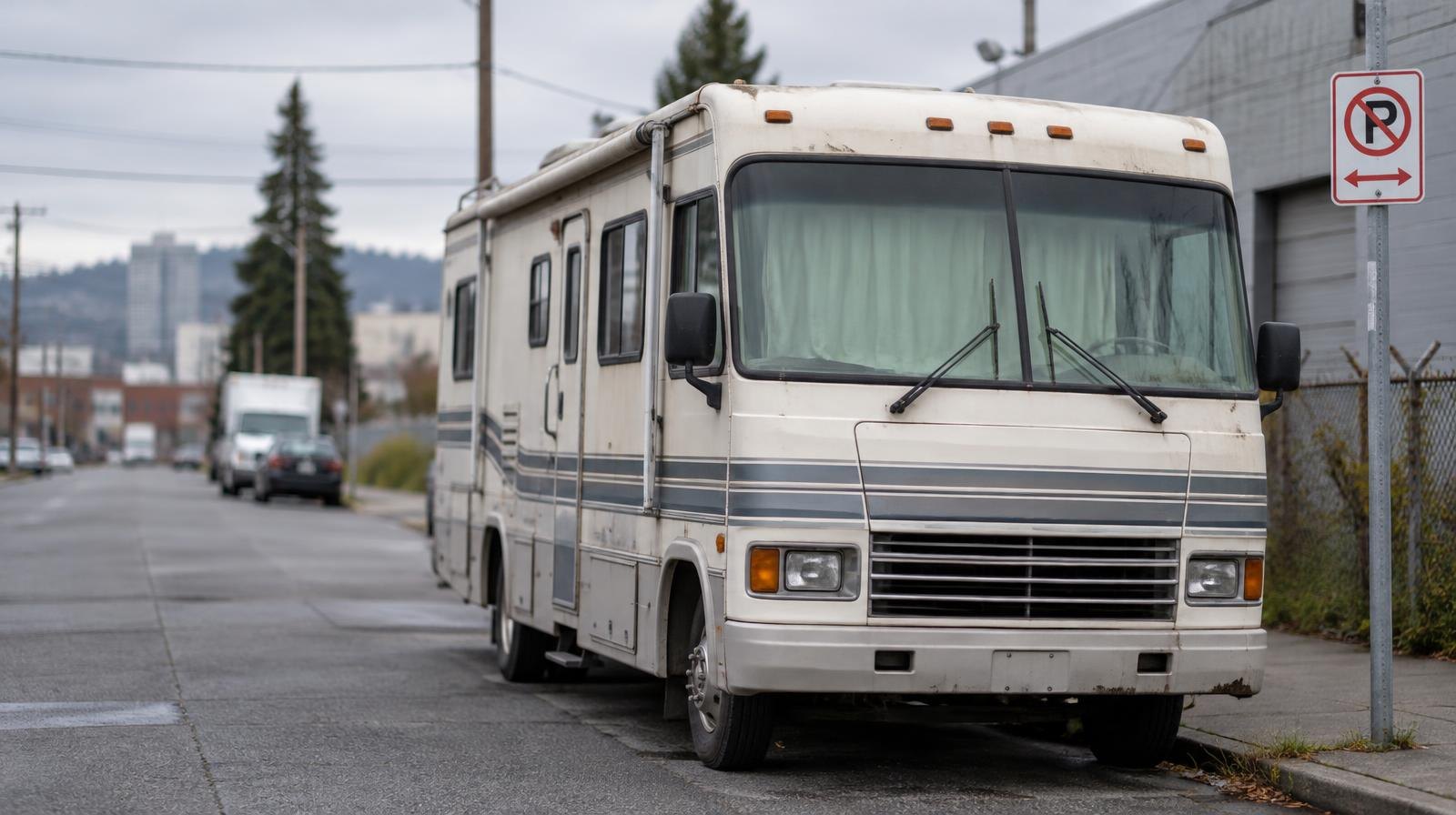
The Seattle City Council voted 6-3 on Tuesday, Oct. 20, to pass a six-bill RV permit program.
Residents in Ballard, Magnolia and other neighborhoods where RVs line industrial streets will face new overnight parking bans and a two-hour limit for unpermitted vehicles.
The Vehicle Resident Assistance Program (VRAP), sponsored by District 6 Councilmember Dan Strauss, replaces the current rule allowing RVs to park for 72 hours in industrial areas.
The new restrictions take effect April 30, 2027, with a 90-day warning period before enforcement begins.
"Our current system is failing and doing nothing is not an option," Strauss said at the Oct. 20 meeting, according to The Seattle Times.
"We need to do better for the people who are living in vehicles and we need to do better for our entire community."
Under the permit system, RV residents identified through a one-time Human Services Department census can get free permits to park overnight in designated industrial zones. They must prove vehicle ownership, work with caseworkers and move every 72 hours. Permits will be revoked if an occupant declines six offers of shelter, according to Capitol Hill Seattle Blog.
RVs without permits can be towed without prior notice. Under current rules, violators receive a written warning first.
The program is projected to cost $8.5 million in 2027 and $3.5 million annually in 2028 and 2029, according to Westside Seattle. The council approved eight new city positions: seven outreach workers in the Human Services Department and one permit technician at the Seattle Department of Transportation.
A September University of Washington study estimated about 377 people live in RVs and other oversized vehicles in Seattle, part of roughly 1,484 people living in vehicles of all sizes.
The vote split the council. Councilmember Alexis Rinck warned that people without permits would have no legal place to park overnight and nowhere to go if they cannot access a safe lot, according to Westside Seattle.
Councilmember Dionne Foster also voted against the permit restrictions, saying the one-time census could exclude people who become homeless later.
"Homelessness isn't a static experience," Foster said at the meeting, according to the Seattle Times.
More than 60 people testified. Blakeley Benson, fleet director for Trident Seafoods in Ballard, and Mike Stewart, executive director of the Ballard Alliance, spoke in favor. Alison Eisinger, director of the Seattle King County Coalition on Homelessness, opposed the package, calling it a "draconian ban" that fails to address criminal activity at specific sites, according to Westside Seattle.
The bills now await Mayor Katie Wilson's signature. Her team has expressed concerns about the cost and consequences for people who may lose their vehicles, the Seattle Times reported.
The Low Income Housing Institute (LIHI) is preparing to open Glassyard Commons, the city's first RV safe lot, in West Seattle. The site will have space for 72 RVs and 20 tiny homes, according to MyNorthwest. Strauss said he introduced a budget addition to fund a second safe lot. The city also faces a projected $175 million budget deficit as the council weighs competing priorities.
King County Councilmember Reagan Dunn introduced separate legislation on Oct. 20 directing the county executive to identify roads where parked vehicles create safety issues and to add new parking restrictions in unincorporated King County.