The City Council committee overseeing Seattle's $1.3 billion education levy meets July 8 to begin amending the six-year spending plan that will shape school meals, mental health services, and college access at every public school in the city.
Council central staff have flagged that the plan contains no explicit targets for closing equity gaps between north end and south end schools, Capitol Hill Seattle Blog reported after the committee's June 30 informational hearing.
Wednesday's 9:30 a.m. session is the first where council members can introduce changes to CB 121240, the implementation and evaluation plan required before any levy dollars can be spent. Council central staff analysts Jasmine Marwaha and Traci Ratzliff will present.
The stakes are sharpest for Title I schools in Southeast Seattle and Beacon Hill. Rainier Beach High School and Cleveland High School STEM serve predominantly low-income students and students of color, with historically lower college-going rates and fewer resources than north end counterparts like Ballard High School and Roosevelt High School. The levy's K-12 component allocates $510.7 million over six years for school-based health centers, mental health services, and safety programs, according to city budget documents. Council staff noted the plan lacks enforceable benchmarks requiring those dollars to flow proportionally to schools with the greatest need, per Capitol Hill Seattle Blog's reporting.
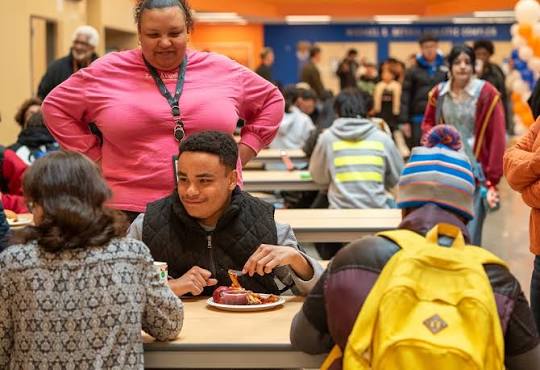
The plan also launches a universal school meals program at 53 public schools and funds Seattle Promise at $82.4 million, providing up to two years of free college tuition for graduates of all nine Seattle comprehensive high schools. Council staff raised concerns about the financial risk of drawing down reserve funds for the meals program.
Councilmember Maritza Rivera chairs the committee. She called the levy investments "essential" after voters approved the measure in November 2025 with 76% of the vote. The June 30 hearing she presided over ran nearly 90 minutes but allowed no amendments.
For special education families across Seattle, the implementation plan's lack of school-level spending detail makes it impossible to assess whether students with IEPs at under-resourced schools will see proportional investment. For multilingual learners at Beacon Hill International School and schools across the Rainier Valley, the same question applies: without disaggregated targets, there is no public accountability for equitable distribution.
What families can do: Public comment is open for the Wednesday, July 8 meeting. Remote sign-up begins at 8:30 a.m. at seattle.gov/council/committees/public-comment. In-person registration requires arrival at Council Chambers, 600 4th Ave., at least 15 minutes before the 9:30 a.m. start. Written comments can be sent to [email protected] no later than four business hours before the meeting.
What's missing: The city has not released a school-by-school breakdown of how levy funds will be distributed. Families seeking that data can submit a public records request under Washington's Public Records Act (RCW 42.56) at seattleschools.org/departments/legal-services/public-records-requests.
Seattle Schools Week Ahead
- Wednesday, July 8, 9:30 a.m. — Select Committee on the FEPP Levy, Council Chambers, 600 4th Ave. First session where amendments to the spending plan can be introduced. Public comment open.