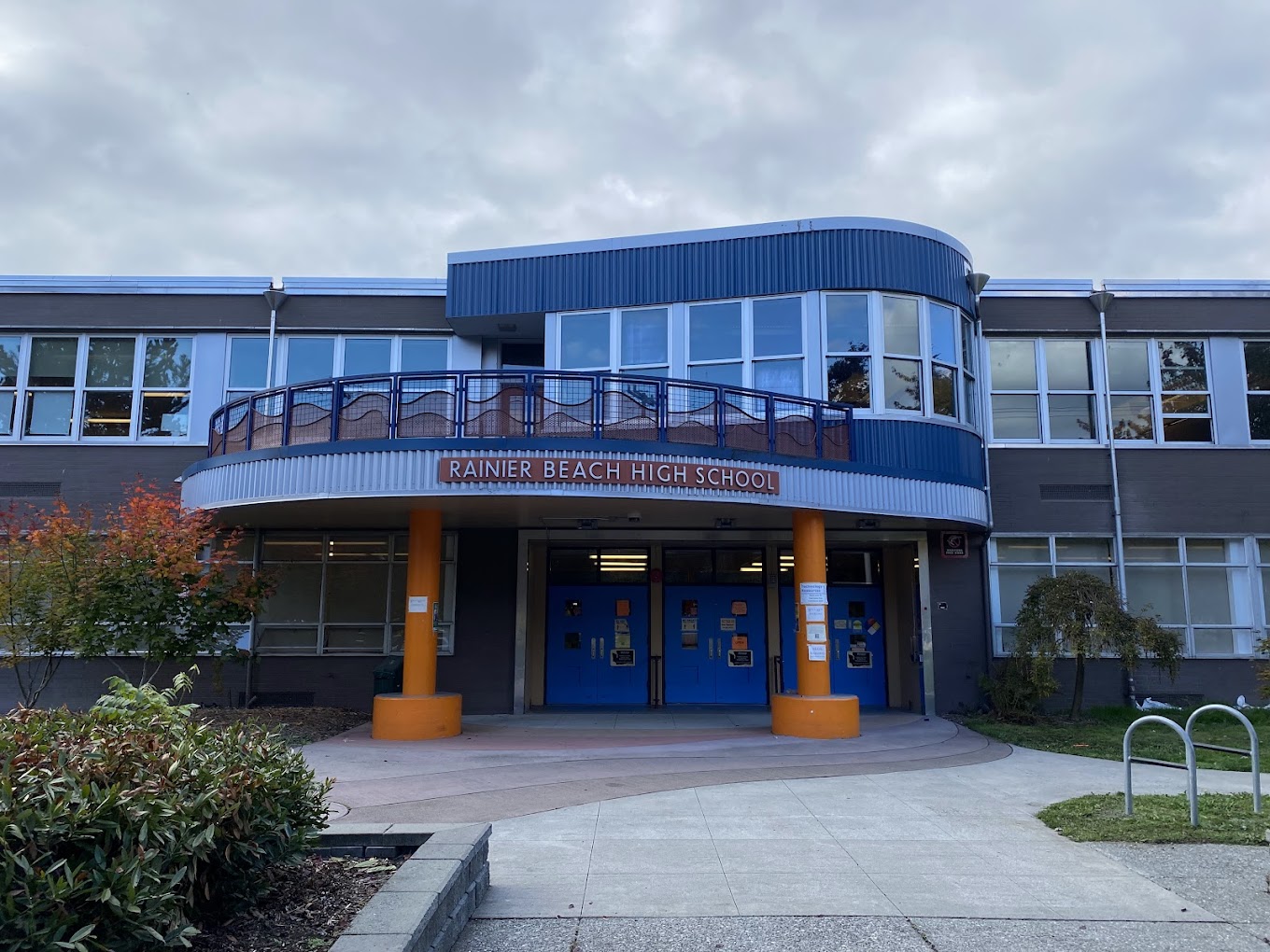
A student at Rainier Beach High School who needs a computer for homework, a quiet place to study, or a tutor who speaks their language can walk to the Rainier Beach Branch on Seward Park Avenue.
That branch offers free drop-in homework help on Mondays and Wednesdays, toddler story time, teen research cohorts, and Kaleidoscope Play & Learn through the Denise Louie Education Center.
Whether those services continue at their current level past 2026 depends on a $480 million library levy Seattle voters will decide on August 4, 2026.
The levy funds one-third of the Seattle Public Library's total operating budget for seven years, from 2027 through 2033. If it fails, programs including multilingual Kaleidoscope Play & Learn, homework help, and story time would face cuts or elimination, according to SPL board president Yazmin Mehdi. SPL has not specified which programs would be reduced first.
Last year, SPL provided more than 1,300 story times and early literacy programs, 1,400 hours of free drop-in tutoring and homework help for school-age kids, and 5,800 programs at community branches attended by 130,000 people.
The system recorded 3.4 million in-person visits and 7.2 million digital checkouts in 2025, according to the South Seattle Emerald.
The levy would cost the median Seattle homeowner $191 a year, about $16 a month, based on a median home assessed at $872,000. That is more than double the approximately $85 a year under the current levy, which expires at the end of 2026.
The increase reflects both expanded services and $69.7 million in council amendments added to Seattle Mayor Katie Wilson's original $410 million proposal.
The City Council added 11 amendments to Wilson's plan, including a seismic retrofit of the historic West Seattle Branch sponsored by Councilmember Alexis Mercedes Rinck. All 11 passed in April.
Councilmember Maritza Rivera, the levy's sponsor, voted to send it to voters but raised fiscal concerns. "The truth is that it is 70% more even after counting for inflation," Rivera said at the April council vote, noting the new levy would bring Seattle within $210 million of its state-mandated levy cap. That cap could constrain future levies for education, transportation, and housing starting in 2030.
The 2019 library levy was $219 million and passed with 71% of the vote.
PTSAs at north end schools raise hundreds of thousands of dollars annually to supplement district funding, according to the South Seattle Emerald. PTSAs at Title I schools like Rainier Beach High School, Cleveland High School STEM, and Aki Kurose Middle School cannot replicate that fundraising. South end library branches fill gaps those schools' communities cannot fund on their own.
The Rainier Beach Branch has some of the highest computer usage of all SPL branches. System-wide, patrons spent 400,000 hours at library computers and printed more than 2 million pages in 2025.
Teen services librarian Alicia Garcia told the South Seattle Emerald that the branch functions as the south end's digital hub, with much of her work focused on getting people access to computers and printing.
The South Park Branch provides resources during school lunch breaks at neighborhood middle and high schools near Chief Sealth International High School and Denny Middle School. The Beacon Hill Branch offers story time in Spanish, Arabic, and Mandarin, serving multilingual families at Beacon Hill International School. The NewHolly Branch offers Play and Learn in Somali with East African Community Services.
"We're a multiplier," Mehdi said in an interview with Seattle's Child. "If the Library has funds, that means the nonprofit community that works to support education of all sorts is also going to be supported."
Ballots for the King County special election arrive in late July. The vote is Tuesday, August 4, 2026. No upcoming community information sessions for the levy were found as of publication; families can check SPL's event calendar at spl.org/calendar or the King County Elections website at kingcounty.gov/elections for updates.
Reporting gap: SPL has not released branch-level usage data broken down by zip code or school enrollment area. Residents can request that data under Washington's Public Records Act (RCW 42.56) through SPL's administrative offices.