If you've watched a bald eagle on a piling at the Hiram Chittenden Locks in Ballard, you've seen the same ecological function performed by two species that just arrived at Woodland Park Zoo
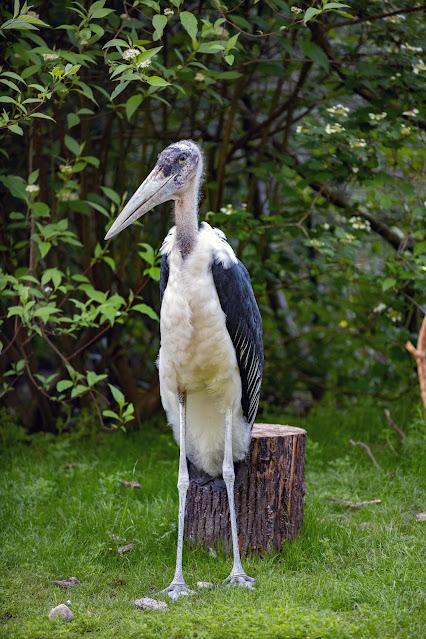
The zoo added two African marabou storks and two critically endangered hooded vultures to its Temperate Forest exhibit this week, according to its blog.
The storks — Olaf, an 8-year-old male, and Abigail, a 4-year-old female — stand nearly 5 feet tall with wingspans up to 10 feet. Their bald heads and necks aren't ornamental: bare skin stays cleaner when feeding on carcasses, the same reason vultures evolved the same feature independently. They share their enclosure with two hooded vultures, across from the maned wolves.
Both species are obligate scavengers who are built to consume carcasses that would otherwise contaminate waterways and spread disease. In African ecosystems, their decline correlates directly with increases in anthrax and botulism. Along Ballard's Ship Canal, healthy bald eagle populations perform the same function, suppressing disease in the salmon runs the neighborhood's fishing industry depends on.
IUCN lists vultures as critically endangered, with populations down more than 80 percent over three generations — primarily from poisoning and habitat loss across sub-Saharan Africa. The zoo's participation in the AZA Species Survival Plan helps maintain a genetically viable captive population while field conservation programs address the poisoning crisis.
For Magnolia residents, Discovery Park is one of the Pacific Northwest's premier urban raptor sites, with documented bald eagle nesting and peregrine falcon activity along the Puget Sound flyway. Seattle Audubon Society logs scavenger and raptor sightings across all three neighborhoods through its annual Christmas Bird Count. The Burke-Gilman Trail in Ballard is a reliable bald eagle feeding site when coho and Chinook move through the Locks each fall.
Marabou storks are not considered threatened, though habitat loss remains the biggest challenge facing wild populations.
Visitors can see Olaf and Abigail during summer hours, 9:30 a.m. to 6 p.m. daily through Labor Day. Admission tickets must be purchased online in advance at tickets.zoo.org. Children 2 and younger are admitted free.